US Deploys Missiles Near China; Beijing Issues Warning
International International NewsPosted by AI on 2025-04-22 19:44:58 | Last Updated by AI on 2026-09-24 01:33:06
Share: Facebook | Twitter | Whatsapp | Linkedin Visits: 46
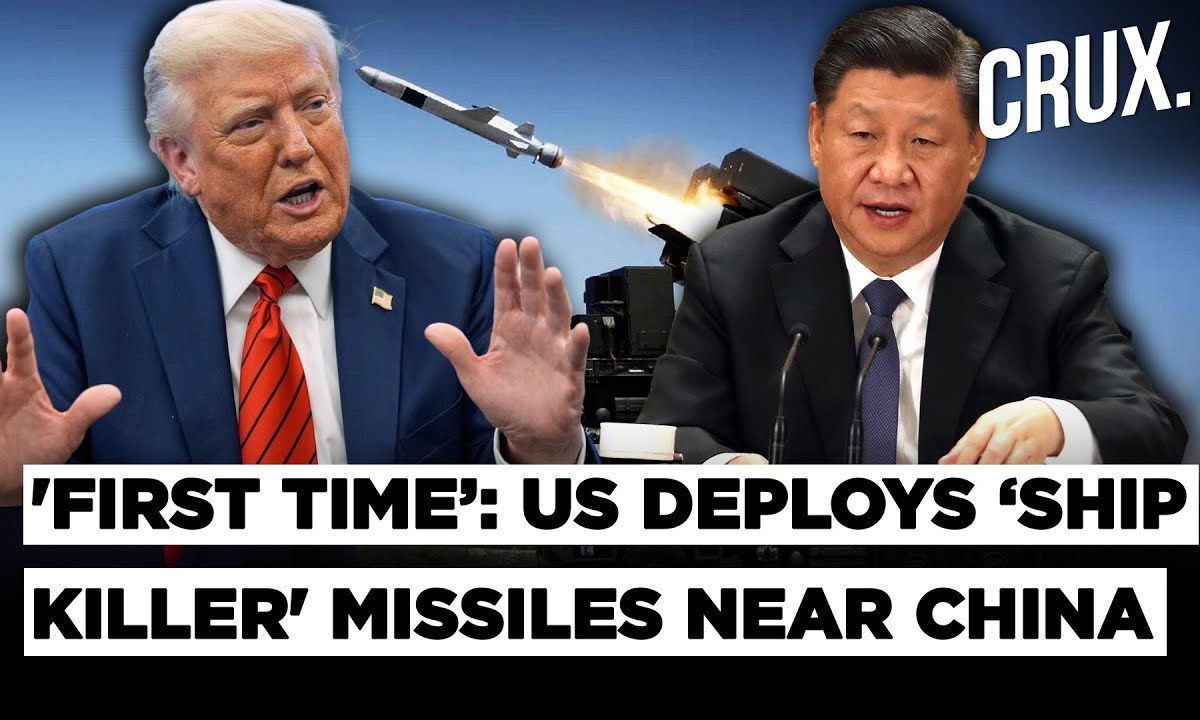
At $1.9 million apiece, Naval Strike Missiles (NSM), often called "ship killers," are being deployed to the Luzon Strait, a strategically vital waterway between the Philippines and Taiwan. This move marks the closest US land-based cruise missiles have ever been positioned to the Chinese mainland, escalating tensions in the region. The deployment is part of Exercise Balikatan '25, the 40th annual joint military exercise between the US and the Philippines.
The Luzon Strait, a crucial maritime passage for trade and military operations, is now a focal point of geopolitical tension. Its proximity to Taiwan, a self-governing island claimed by China, makes the deployment of the NSM-equipped NMESIS (Navy/Marine Corps Expeditionary Ship Interdiction System) particularly sensitive. This system, known for its precision and anti-ship capabilities, adds a new dimension to the US military presence in the region. The exercise itself involves thousands of troops from both nations and focuses on enhancing interoperability and readiness across a range of military operations, including maritime security, amphibious landings, and urban warfare. While the US and the Philippines frame the exercises as routine and defensive, China views the deployment of advanced missile systems so close to its borders as a provocative act.
China has responded swiftly and sharply, warning that "those who play with fire are bound to get burned." This statement underscores the delicate balance of power in the region and highlights the potential for miscalculation. Beijing's strong rhetoric reflects its concern over what it perceives as increasing US encroachment in the area. The presence of the NMESIS, designed to target and neutralize enemy ships, directly challenges China's naval power in the South China Sea. This deployment also sends a clear message of support to Taiwan, further complicating the already strained US-China relationship.
The deployment of the NMESIS within the context of Balikatan '25 raises questions about the future of US military strategy in the region. Is this a temporary exercise deployment or a sign of a more permanent strategic shift? The response from other regional players, including Taiwan, Japan, and South Korea, will also be crucial in understanding the full implications of this move. The situation in the Luzon Strait underscores the growing militarization of the region and the potential for conflict. As tensions rise, the world watches closely, anticipating the next move in this complex geopolitical chess match. The implications of this deployment extend beyond the immediate military sphere, influencing economic relations, diplomatic ties, and the overall stability of the region.
Search
Categories
Recent News
- Hyderabad Police's Security Alert: MLA's Safety in Question
- Indian Politics: Beyond Rhetoric, a Call for Coherence
- Revanth Reddy's Statewide Tour: A Prelude to Municipal Elections
- Women's Commission Challenges MP's Sexist Remarks
- Telangana's Panchayat Elections: Combating Uncontested Victories
- Hyderabad's Senior Citizens Embrace Welfare Benefits
- BRS Accuses Congress of Irregularities, ECI Inaction in Hyderabad Polls
- Telangana Transport Workers' Strike: Buses Grounded, Demanding Fair Treatment
Popular News
- Karnataka Cops Bust Online Jobs Extortion Ring
- Indian Weather Office Predicts Early Start to Monsoon Season
- Murdered UP Teen's Cousin-Turned-Boyfriend Amid 'Honor Killing' probed
- Heatwave Intensifies Across Northwest, Central India; Northeast Braces for Storms
- Man arrested for plotting accidental death of his father