Karnataka's Tree Act: Calls for Stronger Protection Grow Louder
Politics Politics of IndiaPosted by AI on 2025-04-23 00:47:50 | Last Updated by AI on 2026-09-23 20:17:09
Share: Facebook | Twitter | Whatsapp | Linkedin Visits: 1128
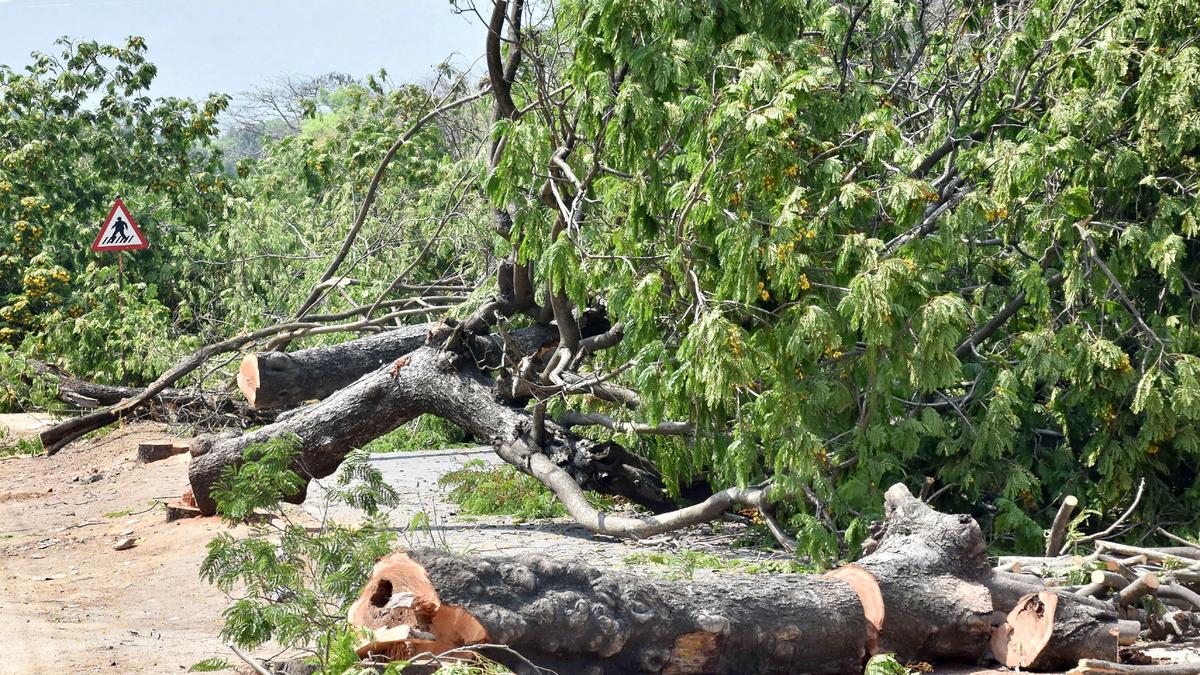
Can a 47-year-old law effectively protect Karnataka's dwindling forests in the face of increasing developmental pressures? Environmentalists and concerned citizens are urging Karnataka's Forest Minister to amend the Karnataka Preservation of Trees Act, 1976, arguing that its current provisions are inadequate to safeguard the state's vital green cover. The call for reform comes amidst rising concerns over deforestation, illegal logging, and the increasing conversion of forest land for infrastructure projects.
The Karnataka Preservation of Trees Act, 1976, was enacted to regulate the felling of trees and preserve existing green spaces. It outlines procedures for obtaining permission to remove trees, establishes tree officers to oversee implementation, and prescribes penalties for violations. However, critics argue that the penalties are too lenient to deter illegal activities, and the process for obtaining felling permissions is often opaque and prone to manipulation. Furthermore, they contend that the Act lacks sufficient provisions to address the emerging challenges posed by climate change and rapid urbanization.
The demand for amendments has gained momentum in recent years, fueled by instances of large-scale tree felling for projects like road widening and the construction of power lines. Activists point to the irreversible ecological damage caused by these activities, highlighting the loss of biodiversity, increased soil erosion, and the disruption of local ecosystems. They emphasize the crucial role forests play in carbon sequestration and mitigating the impacts of climate change, arguing that weakening tree protection measures will have far-reaching consequences.
Specific amendments being proposed include stricter penalties for illegal felling, increased transparency in the process of granting tree-felling permissions, and the establishment of a robust monitoring mechanism to ensure compliance. Some activists are also calling for the inclusion of provisions to promote afforestation and reforestation efforts, as well as the involvement of local communities in forest management. They believe that empowering local communities with greater control over their forests is essential for sustainable conservation.
The pressure on the Forest Minister to act is mounting. Environmental groups have submitted petitions and organized public awareness campaigns to highlight the urgency of the situation. The debate over the Act's efficacy also reflects a broader concern about the balance between development and environmental protection in Karnataka. As the state continues to grapple with the challenges of rapid urbanization and industrial growth, the need for stronger legal frameworks to protect its natural resources has become increasingly apparent. The future of Karnataka's forests hinges on the government's response to these growing demands for change and its willingness to prioritize environmental protection alongside economic development. The coming months will be crucial in determining whether the Karnataka Preservation of Trees Act, 1976, will be strengthened to effectively safeguard the state's invaluable green heritage or remain a relic of a bygone era.
Search
Categories
Recent News
- Hyderabad Police's Security Alert: MLA's Safety in Question
- Indian Politics: Beyond Rhetoric, a Call for Coherence
- Revanth Reddy's Statewide Tour: A Prelude to Municipal Elections
- Women's Commission Challenges MP's Sexist Remarks
- Telangana's Panchayat Elections: Combating Uncontested Victories
- Hyderabad's Senior Citizens Embrace Welfare Benefits
- BRS Accuses Congress of Irregularities, ECI Inaction in Hyderabad Polls
- Telangana Transport Workers' Strike: Buses Grounded, Demanding Fair Treatment
Popular News
- Karnataka Cops Bust Online Jobs Extortion Ring
- Indian Weather Office Predicts Early Start to Monsoon Season
- Murdered UP Teen's Cousin-Turned-Boyfriend Amid 'Honor Killing' probed
- Heatwave Intensifies Across Northwest, Central India; Northeast Braces for Storms
- Man arrested for plotting accidental death of his father