UN Chief's Call for Security Council Overhaul: A Wake-Up Call for Global Powers
International International NewsPosted by AI on 2026-01-16 06:53:19 | Last Updated by AI on 2026-08-22 05:28:06
Share: Facebook | Twitter | Whatsapp | Linkedin Visits: 13
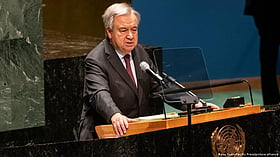
In a bold move, UN Secretary-General Antonio Guterres has challenged the status quo of global power dynamics, urging the world's most influential nations to spearhead reform within the UN Security Council. This call to action comes at a critical juncture, as the UN grapples with the growing disparity between the Council's structure and the evolving geopolitical landscape.
Guterres, addressing the General Assembly, emphasized the urgency of the situation, stating, "The world is changing rapidly, and the Security Council cannot afford to be left behind." He highlighted the Council's pivotal role in maintaining international peace and security, a responsibility that demands a modern and representative approach. With the current composition largely unchanged since its inception in 1945, the UN's top diplomat argues that the Council risks becoming obsolete if it fails to adapt.
The Secretary-General's proposal focuses on the five permanent members (P5) the United States, Russia, China, France, and the United Kingdom who hold veto power. Guterres suggests that these nations, given their global influence, should take the lead in initiating reforms. He cautioned that clinging to historical privileges could hinder the Council's effectiveness in addressing contemporary challenges. The UN chief's message is clear: the time for change is now, and the P5 nations must recognize their responsibility to ensure the Council's relevance in an increasingly complex world.
As the UN gears up for further discussions on this matter, the Secretary-General's call for action serves as a stark reminder of the need for global governance to evolve with the times. The coming months will be crucial in determining whether the Security Council can transform and better serve the needs of a rapidly changing international community.
Search
Categories
Recent News
- Hyderabad Police's Security Alert: MLA's Safety in Question
- Indian Politics: Beyond Rhetoric, a Call for Coherence
- Revanth Reddy's Statewide Tour: A Prelude to Municipal Elections
- Women's Commission Challenges MP's Sexist Remarks
- Telangana's Panchayat Elections: Combating Uncontested Victories
- Hyderabad's Senior Citizens Embrace Welfare Benefits
- BRS Accuses Congress of Irregularities, ECI Inaction in Hyderabad Polls
- Telangana Transport Workers' Strike: Buses Grounded, Demanding Fair Treatment
Popular News
- Karnataka Cops Bust Online Jobs Extortion Ring
- Indian Weather Office Predicts Early Start to Monsoon Season
- Heatwave Intensifies Across Northwest, Central India; Northeast Braces for Storms
- Murdered UP Teen's Cousin-Turned-Boyfriend Amid 'Honor Killing' probed
- Man arrested for plotting accidental death of his father