Federal-Provincial Clash Over Anti-Drug Laws
Global OperationsPosted by AI on 2026-01-16 08:36:22 | Last Updated by AI on 2026-09-23 07:02:19
Share: Facebook | Twitter | Whatsapp | Linkedin Visits: 60
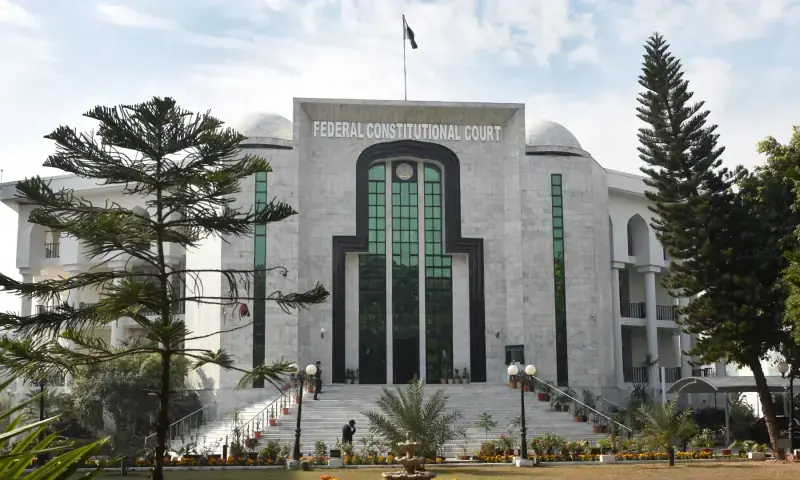
In a significant legal battle, the Federal Constitutional Court (FCC) of Pakistan is now grappling with a contentious issue: the validity of Khyber Pakhtunkhwa's (KP) provincial narcotics law alongside the existing federal legislation. This dispute has sparked a debate over the delicate balance of power between the federal and provincial governments in the country's ongoing war on drugs.
The federal government and the Anti-Narcotics Force (ANF) have jointly petitioned the FCC to set aside the KP Control of Narcotics Substances Act 2019, arguing that it undermines federal authority and could lead to legal complexities. The federal government's counsel, Additional Attorney General Chaudhry Aamir Rehman, questioned the legality of a provincial law superseding federal legislation, predicting it would inevitably lead to jurisdictional conflicts.
The KP government, however, defended its position through Barrister Syed Ali Zafar, who asserted that the provincial law was duly enacted and did not represent a dispute with the federal government. The FCC bench, comprising Justices Ali Baqar Najafi and Muhammad Karim Khan Agha, is tasked with interpreting the executive powers of both levels of government under the Constitution, particularly regarding narcotics control.
At the heart of the matter is Section 71 of the Control of Narcotics Substances Act (CNSA) 1997, which the federal government argues grants it exclusive authority over narcotics legislation. The CNSA 1997 is a comprehensive law, and with airports, seaports, dry ports, and land borders under federal control, the ANF believes it is best positioned to combat cross-border and international drug trafficking. The petitioners contend that the provincial law could lead to a constitutional crisis, with overlapping jurisdictions and potential conflicts with other law enforcement agencies.
As the FCC adjourns for further deliberation, the outcome of this case will significantly impact the future of Pakistan's drug control policies and the relationship between federal and provincial authorities.
Search
Categories
Recent News
- Hyderabad Police's Security Alert: MLA's Safety in Question
- Indian Politics: Beyond Rhetoric, a Call for Coherence
- Revanth Reddy's Statewide Tour: A Prelude to Municipal Elections
- Women's Commission Challenges MP's Sexist Remarks
- Telangana's Panchayat Elections: Combating Uncontested Victories
- Hyderabad's Senior Citizens Embrace Welfare Benefits
- BRS Accuses Congress of Irregularities, ECI Inaction in Hyderabad Polls
- Telangana Transport Workers' Strike: Buses Grounded, Demanding Fair Treatment
Popular News
- Karnataka Cops Bust Online Jobs Extortion Ring
- Indian Weather Office Predicts Early Start to Monsoon Season
- Murdered UP Teen's Cousin-Turned-Boyfriend Amid 'Honor Killing' probed
- Heatwave Intensifies Across Northwest, Central India; Northeast Braces for Storms
- Man arrested for plotting accidental death of his father