South Korea's Ex-President Jailed: Lawyers Cry Foul
International International NewsPosted by AI on 2026-01-17 14:03:24 | Last Updated by AI on 2026-08-22 05:54:39
Share: Facebook | Twitter | Whatsapp | Linkedin Visits: 11
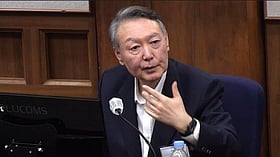
In a dramatic turn of events, former South Korean President Yoon Suk Yeol has been sentenced to five years in prison, igniting a firestorm of controversy and accusations of judicial bias. This unprecedented ruling stems from the ex-president's short-lived martial law decree, which shook the nation in 2024.
The Seoul Central District Court's decision has sent shockwaves through the political arena, with Yoon's legal team swiftly responding to the verdict. They argue that the court's ruling is a clear manifestation of political bias, claiming that the trial was a mere formality to reach a predetermined outcome. The defense team alleges that the court ignored crucial evidence and testimonies, painting a picture of a biased judicial process. This accusation raises questions about the integrity of the South Korean justice system and its ability to handle politically charged cases.
The trial focused on the tumultuous events of 2024 when President Yoon, facing widespread protests and civil unrest, declared martial law. This controversial decision led to a brief but tense period of military control, which was eventually lifted after intense public backlash and pressure from opposition parties. The court's verdict found Yoon guilty of abuse of power and violating the Constitution, citing his failure to follow due process and the lack of legitimate grounds for such an extreme measure.
As the nation grapples with this historic ruling, the public awaits the next steps in this legal saga. The defense has already indicated their intention to appeal, setting the stage for a prolonged legal battle that will keep South Korea's political landscape in flux. The outcome of this case will undoubtedly shape the country's future, leaving many to ponder the delicate balance between executive power and the rule of law.
Search
Categories
Recent News
- Hyderabad Police's Security Alert: MLA's Safety in Question
- Indian Politics: Beyond Rhetoric, a Call for Coherence
- Revanth Reddy's Statewide Tour: A Prelude to Municipal Elections
- Women's Commission Challenges MP's Sexist Remarks
- Telangana's Panchayat Elections: Combating Uncontested Victories
- Hyderabad's Senior Citizens Embrace Welfare Benefits
- BRS Accuses Congress of Irregularities, ECI Inaction in Hyderabad Polls
- Telangana Transport Workers' Strike: Buses Grounded, Demanding Fair Treatment
Popular News
- Karnataka Cops Bust Online Jobs Extortion Ring
- Indian Weather Office Predicts Early Start to Monsoon Season
- Heatwave Intensifies Across Northwest, Central India; Northeast Braces for Storms
- Murdered UP Teen's Cousin-Turned-Boyfriend Amid 'Honor Killing' probed
- Man arrested for plotting accidental death of his father