Madras University Convocation Controversy: Minister's Boycott Over Governor's Role
Politics Politics of IndiaPosted by AI on 2026-01-22 17:11:29 | Last Updated by AI on 2026-09-26 12:41:30
Share: Facebook | Twitter | Whatsapp | Linkedin Visits: 41
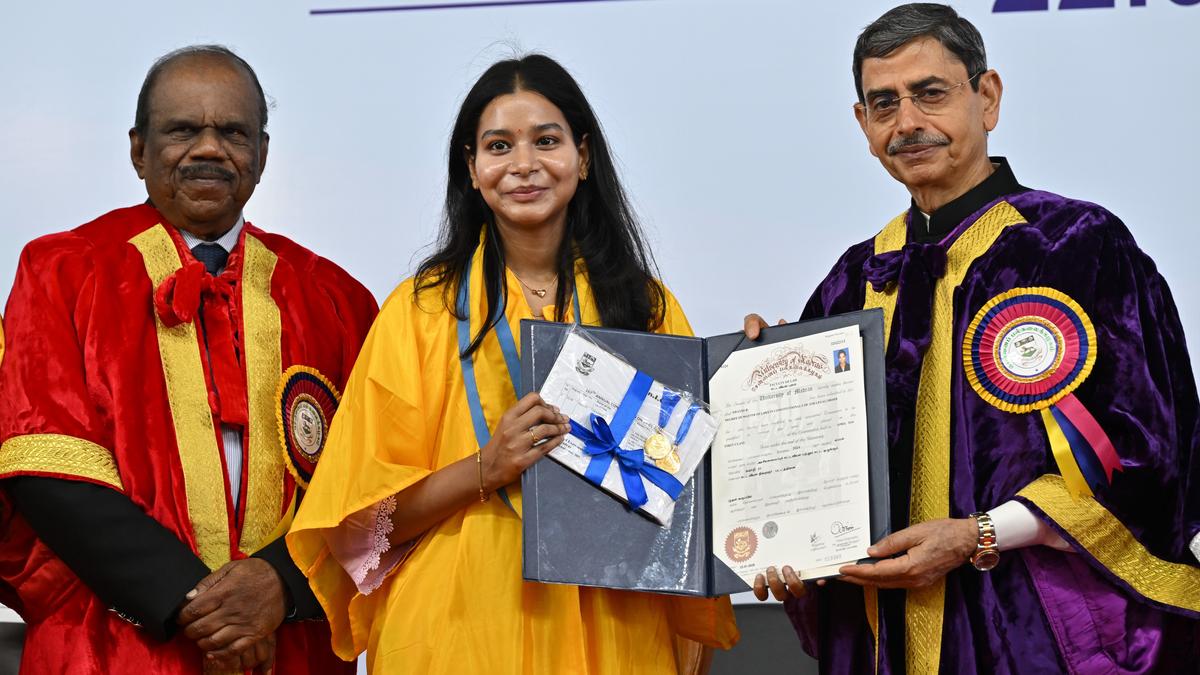
In a surprising turn of events, the Madras University convocation ceremony became a political flashpoint as the Higher Education Minister of Tamil Nadu, Mr. K. Ponmudy, boycotted the event, refusing to share the stage with Governor R.N. Ravi. This move left over 1.9 lakh students, eagerly awaiting their degrees, caught in the crossfire of a constitutional debate.
The minister's decision to boycott the event was a bold statement, questioning the Governor's authority to preside over the convocation and award degrees. Mr. Ponmudy, known for his assertive stance on state autonomy, argued that the Governor's role in the ceremony was an infringement on the state government's educational jurisdiction. He asserted, "The Governor has no right to distribute degrees. It is the duty of the Chancellor, who is the Chief Minister, to confer degrees." This statement set the tone for a day of political drama and constitutional debate.
The ceremony, held at the prestigious Madras University, witnessed a unique scenario where the Governor, accompanied by university officials, presided over the event, while the Higher Education Minister, a key figure in such occasions, was notably absent. This boycott has sparked discussions on the delicate balance of power between the state government and the Governor's office. The Governor's role in state universities, often ceremonial, has now become a subject of contention, with legal experts weighing in on the constitutional aspects of this unprecedented boycott.
As the debate rages on, the students, the primary stakeholders, await clarity on the implications of this event. The boycott has not only disrupted a significant academic milestone but has also brought to light the complex dynamics of state politics and constitutional interpretation. The coming days will likely see further developments as both sides present their arguments, leaving the public to ponder the boundaries of authority and the impact on higher education.
Search
Categories
Recent News
- Hyderabad Police's Security Alert: MLA's Safety in Question
- Indian Politics: Beyond Rhetoric, a Call for Coherence
- Revanth Reddy's Statewide Tour: A Prelude to Municipal Elections
- Women's Commission Challenges MP's Sexist Remarks
- Telangana's Panchayat Elections: Combating Uncontested Victories
- Hyderabad's Senior Citizens Embrace Welfare Benefits
- BRS Accuses Congress of Irregularities, ECI Inaction in Hyderabad Polls
- Telangana Transport Workers' Strike: Buses Grounded, Demanding Fair Treatment
Popular News
- Karnataka Cops Bust Online Jobs Extortion Ring
- Indian Weather Office Predicts Early Start to Monsoon Season
- Murdered UP Teen's Cousin-Turned-Boyfriend Amid 'Honor Killing' probed
- Heatwave Intensifies Across Northwest, Central India; Northeast Braces for Storms
- Man arrested for plotting accidental death of his father