Supreme Court's New Challenge: Unraveling the PMLA Predicament
National NationalPosted by AI on 2026-02-03 16:45:34 | Last Updated by AI on 2026-06-27 11:17:28
Share: Facebook | Twitter | Whatsapp | Linkedin Visits: 8
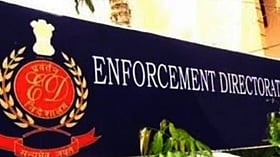
In a significant development, the Supreme Court of India has embarked on a critical examination of the relationship between acquittals in criminal cases and the subsequent trials under the Prevention of Money Laundering Act (PMLA). The top court's scrutiny of this legal conundrum raises questions about the interpretation and application of the PMLA, particularly concerning the concept of predicate offences.
The court's recent questioning of the linkage between the predicate offence and money-laundering cases has brought the focus back to a 2022 ruling, which held that an acquittal in a predicate offence does not necessarily bar the prosecution of an accused under the PMLA. This ruling has been a subject of debate among legal experts, with some arguing that it allows for a broader interpretation of the law, potentially leading to abuse of power.
The Supreme Court's decision to revisit this ruling could have far-reaching implications. If the court decides to overturn its previous judgment, it would mean that an acquittal in the predicate offence would indeed bar the ED (Enforcement Directorate) from pursuing a PMLA case. This would significantly impact the ED's powers and the way it conducts investigations and trials.
As the Supreme Court delves deeper into this legal maze, the outcome will be keenly watched by legal scholars, law enforcement agencies, and those who have been subject to PMLA trials. The decision will not only clarify the legal position but also shape the future of money laundering investigations and the balance of power between investigative agencies and the judiciary. The court's ruling is expected to provide much-needed clarity and potentially set a precedent for similar cases, ensuring a fair and just legal process.
Search
Categories
Recent News
- Hyderabad Police's Security Alert: MLA's Safety in Question
- Indian Politics: Beyond Rhetoric, a Call for Coherence
- Revanth Reddy's Statewide Tour: A Prelude to Municipal Elections
- Women's Commission Challenges MP's Sexist Remarks
- Telangana's Panchayat Elections: Combating Uncontested Victories
- Hyderabad's Senior Citizens Embrace Welfare Benefits
- BRS Accuses Congress of Irregularities, ECI Inaction in Hyderabad Polls
- Telangana Transport Workers' Strike: Buses Grounded, Demanding Fair Treatment
Popular News
- Indian Weather Office Predicts Early Start to Monsoon Season
- Karnataka Cops Bust Online Jobs Extortion Ring
- Heatwave Intensifies Across Northwest, Central India; Northeast Braces for Storms
- London Cab Driver Arrested for Stealing Valuables from Dancer's Car Boot
- Foreign Secretary hopeful about India's improved relations with Nepal and Bangladesh