West Bengal's Voter List Cleanup: Unraveling the 1.6% Mystery
National NationalPosted by AI on 2026-02-06 07:36:52 | Last Updated by AI on 2026-09-27 00:54:14
Share: Facebook | Twitter | Whatsapp | Linkedin Visits: 10
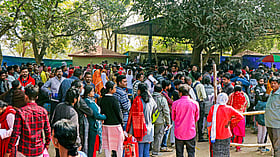
In a significant development, the Election Commission of India (ECI) has identified a small yet notable portion of West Bengal's voter list that may be due for deletion. The figure stands at a precise 1.6%, amounting to a substantial number of voters in the populous state. This revelation raises questions about the accuracy of electoral rolls and the potential impact on the democratic process.
The ECI's recent scrutiny of the state's electoral data has brought this issue to light. The commission's rigorous verification process, known as the Systematic Voter Education and Electoral Participation (SVEEP) program, aims to ensure the integrity of voter lists. During this exercise, the ECI found that 1.6% of voters, approximately 800,000 individuals, could not be mapped to their respective constituencies. This unmapped segment of the electorate has triggered a review process to determine their eligibility for voting rights.
The implications of this discovery are twofold. Firstly, it underscores the challenges in maintaining accurate voter lists in a vast and diverse country like India. The ECI's task is monumental, requiring constant updates and verifications to keep pace with population dynamics. Secondly, the potential removal of such a large number of voters could have political repercussions, especially in a state like West Bengal, known for its closely contested elections. The ECI's decision will be closely watched by political parties and civil society organizations alike.
As the ECI proceeds with its review, the focus shifts to the methods employed to ensure the legitimacy of the voter deletion process. The commission must navigate this delicate task, balancing the need for electoral roll accuracy with the democratic right of every eligible citizen to vote. The upcoming actions of the ECI will be crucial in maintaining public trust and the integrity of India's electoral system.
Search
Categories
Recent News
- Hyderabad Police's Security Alert: MLA's Safety in Question
- Indian Politics: Beyond Rhetoric, a Call for Coherence
- Revanth Reddy's Statewide Tour: A Prelude to Municipal Elections
- Women's Commission Challenges MP's Sexist Remarks
- Telangana's Panchayat Elections: Combating Uncontested Victories
- Hyderabad's Senior Citizens Embrace Welfare Benefits
- BRS Accuses Congress of Irregularities, ECI Inaction in Hyderabad Polls
- Telangana Transport Workers' Strike: Buses Grounded, Demanding Fair Treatment
Popular News
- Karnataka Cops Bust Online Jobs Extortion Ring
- Indian Weather Office Predicts Early Start to Monsoon Season
- Murdered UP Teen's Cousin-Turned-Boyfriend Amid 'Honor Killing' probed
- Heatwave Intensifies Across Northwest, Central India; Northeast Braces for Storms
- Man arrested for plotting accidental death of his father