Sirathu MLA Booked After Varanasi Dharna Protest
Politics Politics of IndiaPosted by AI on 2025-04-27 07:18:14 | Last Updated by AI on 2026-09-24 02:34:21
Share: Facebook | Twitter | Whatsapp | Linkedin Visits: 42
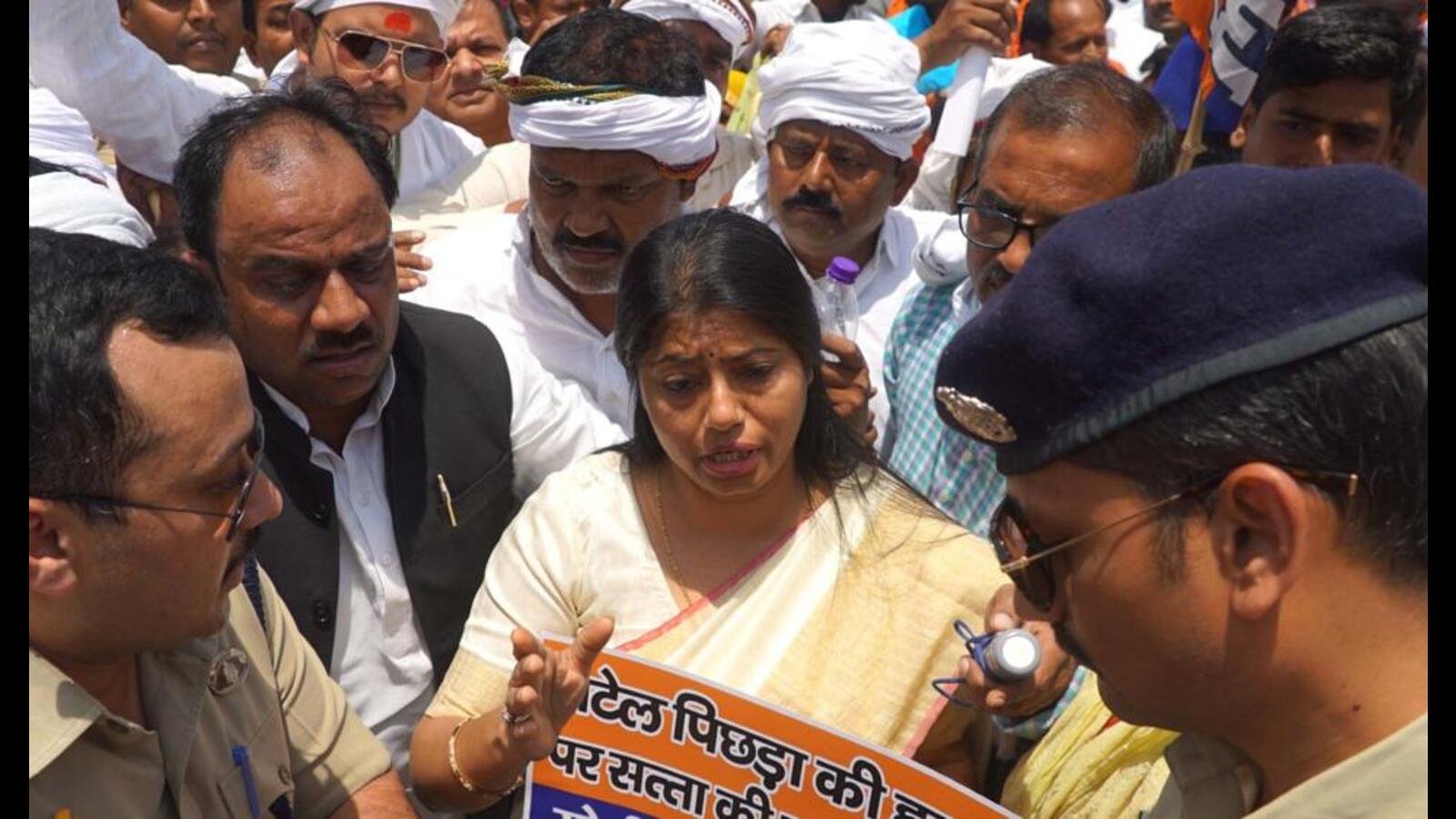
How far would you go to demand justice? For Pallavi Patel, the Samajwadi Party MLA representing Sirathu in the Uttar Pradesh Legislative Assembly, that meant staging a dharna, a sit-in protest, in the bustling city of Varanasi. However, this act of defiance has landed her and her supporters in legal trouble, booked for protesting without prior permission. The incident stems from a tragic event: the murder of a young boy in Varanasi.
The details surrounding the boy's murder remain shrouded in complexity, fueling public anger and prompting calls for swift action. It was in this emotionally charged atmosphere that Patel, accompanied by her party workers, arrived in Varanasi, seemingly to show solidarity with the grieving family and amplify the demand for justice. However, their attempt to stage a public demonstration was met with resistance from law enforcement. According to reports, police officials intervened, preventing the group from proceeding with their planned dharna, citing the absence of necessary permits. This sparked a tense standoff, culminating in the MLA and her supporters initiating their protest on the spot.
The situation quickly escalated. Images from the scene depict a crowd of protestors, led by Patel, holding placards and raising slogans, demanding accountability for the boy's death and criticizing the perceived inaction of authorities. The police, tasked with maintaining order, were present in significant numbers, monitoring the situation closely. The unauthorized nature of the protest quickly became the focal point, overshadowing the initial cause. Authorities swiftly moved to register a case against Patel and her participating supporters, citing violation of legal procedures governing public demonstrations. This move has further intensified the political climate, with the Samajwadi Party condemning the police action and characterizing it as an attempt to suppress legitimate dissent. They argue that the MLA and her supporters were exercising their democratic right to protest and demand justice for the slain child.
The incident raises several important questions. While the right to peaceful assembly is a cornerstone of democracy, the legal framework requires adherence to specific procedures, including obtaining prior permission for public demonstrations. The clash between the urgency of the situation, the emotional outpouring of grief and anger, and the procedural requirements for public protest has created a complex legal and political tangle. The case against Patel and her supporters will likely proceed through the legal channels, with the court ultimately deciding on the merits of the charges. This incident underscores the delicate balance between the right to protest and the need to maintain law and order, a balance that is often tested in times of heightened public emotion and political tension. The aftermath of this dharna and the resulting legal proceedings will undoubtedly be closely watched by political observers and citizens alike, with potential implications for future demonstrations and the broader political landscape in Uttar Pradesh.
Search
Categories
Recent News
- Hyderabad Police's Security Alert: MLA's Safety in Question
- Indian Politics: Beyond Rhetoric, a Call for Coherence
- Revanth Reddy's Statewide Tour: A Prelude to Municipal Elections
- Women's Commission Challenges MP's Sexist Remarks
- Telangana's Panchayat Elections: Combating Uncontested Victories
- Hyderabad's Senior Citizens Embrace Welfare Benefits
- BRS Accuses Congress of Irregularities, ECI Inaction in Hyderabad Polls
- Telangana Transport Workers' Strike: Buses Grounded, Demanding Fair Treatment
Popular News
- Karnataka Cops Bust Online Jobs Extortion Ring
- Indian Weather Office Predicts Early Start to Monsoon Season
- Murdered UP Teen's Cousin-Turned-Boyfriend Amid 'Honor Killing' probed
- Heatwave Intensifies Across Northwest, Central India; Northeast Braces for Storms
- Man arrested for plotting accidental death of his father