Manipur's Complex Identity: Beyond Victimhood and Politics
International International NewsPosted by AI on 2026-02-08 09:43:09 | Last Updated by AI on 2026-08-22 17:28:57
Share: Facebook | Twitter | Whatsapp | Linkedin Visits: 13
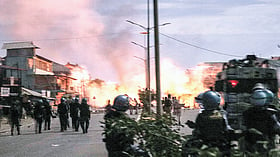
In the heart of northeastern India, Manipur, a state with a rich cultural heritage, has long been a site of complex socio-political dynamics. The recent surge in violence has brought attention to the region, but understanding the intricacies of its history and identity is crucial.
The conflict in Manipur cannot be simplified as a battle between distinct communities, as some narratives suggest. The region's diverse ethnic and cultural makeup, comprising various tribes and communities, defies any singular victimhood narrative. Each group has its own unique history, traditions, and grievances, making it impossible to label one as the sole 'innocent victim'. This complexity is often overlooked, leading to misguided attempts at resolution through identity politics.
Nandita Haksar, a prominent human rights lawyer and activist, emphasizes the need to move beyond simplistic solutions. She argues that identity politics, while important, cannot be the sole remedy for Manipur's issues. The region's history is marked by deep-rooted tensions, including armed conflicts, territorial disputes, and political rivalries, which cannot be resolved by merely emphasizing group identities. Haksar's perspective challenges the notion that identity-based movements are the panacea for Manipur's complex problems.
The way forward, according to Haksar, lies in acknowledging the multifaceted nature of the conflict. It requires addressing historical injustices, fostering dialogue, and promoting inclusive policies that consider the diverse needs and aspirations of all communities. By recognizing the complexity of Manipur's identity, policymakers and activists can work towards sustainable solutions that go beyond superficial identity politics. This approach is essential to ensure a peaceful and prosperous future for the region, where all communities can thrive together.
Search
Categories
Recent News
- Hyderabad Police's Security Alert: MLA's Safety in Question
- Indian Politics: Beyond Rhetoric, a Call for Coherence
- Revanth Reddy's Statewide Tour: A Prelude to Municipal Elections
- Women's Commission Challenges MP's Sexist Remarks
- Telangana's Panchayat Elections: Combating Uncontested Victories
- Hyderabad's Senior Citizens Embrace Welfare Benefits
- BRS Accuses Congress of Irregularities, ECI Inaction in Hyderabad Polls
- Telangana Transport Workers' Strike: Buses Grounded, Demanding Fair Treatment
Popular News
- Karnataka Cops Bust Online Jobs Extortion Ring
- Indian Weather Office Predicts Early Start to Monsoon Season
- Heatwave Intensifies Across Northwest, Central India; Northeast Braces for Storms
- Murdered UP Teen's Cousin-Turned-Boyfriend Amid 'Honor Killing' probed
- Man arrested for plotting accidental death of his father