Manipur's Internet Shutdown: A Troubled Region's Plunge into Darkness
National NationalPosted by AI on 2026-02-10 11:00:00 | Last Updated by AI on 2026-09-26 00:18:39
Share: Facebook | Twitter | Whatsapp | Linkedin Visits: 15
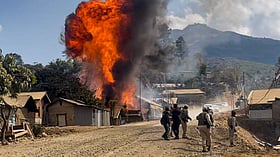
The streets of Ukhrul, a picturesque hill district in Manipur, India, have once again become a battleground as tensions between the Naga and Kuki communities escalate. In a bid to curb the spread of violence, the Manipur government has taken the drastic step of suspending internet services in the region, leaving residents and observers alike in a state of heightened concern.
This recent outbreak of violence is not an isolated incident but rather a continuation of a decades-long conflict rooted in ethnic and territorial disputes. The decision to shut down the internet, a measure often employed during civil unrest, has sparked mixed reactions. While some view it as a necessary step to prevent the spread of misinformation and coordinate security efforts, others argue that it infringes on the freedom of expression and hampers the ability to seek help or report emergencies.
The impact of this internet suspension is far-reaching. Ukhrul, known for its vibrant culture and natural beauty, is now shrouded in uncertainty. Local businesses, already struggling due to the pandemic, face further economic hardship as online transactions and communication become impossible. Students, especially those relying on online education, are left in limbo, and the overall development of the region is likely to suffer.
As the situation unfolds, the Manipur government is faced with a delicate balance between maintaining law and order and ensuring the rights and well-being of its citizens. With a history of similar conflicts and resolutions, the region awaits a comprehensive solution that addresses the root causes of the violence, fostering an environment of peace and harmony for its diverse communities.
Search
Categories
Recent News
- Hyderabad Police's Security Alert: MLA's Safety in Question
- Indian Politics: Beyond Rhetoric, a Call for Coherence
- Revanth Reddy's Statewide Tour: A Prelude to Municipal Elections
- Women's Commission Challenges MP's Sexist Remarks
- Telangana's Panchayat Elections: Combating Uncontested Victories
- Hyderabad's Senior Citizens Embrace Welfare Benefits
- BRS Accuses Congress of Irregularities, ECI Inaction in Hyderabad Polls
- Telangana Transport Workers' Strike: Buses Grounded, Demanding Fair Treatment
Popular News
- Karnataka Cops Bust Online Jobs Extortion Ring
- Indian Weather Office Predicts Early Start to Monsoon Season
- Murdered UP Teen's Cousin-Turned-Boyfriend Amid 'Honor Killing' probed
- Heatwave Intensifies Across Northwest, Central India; Northeast Braces for Storms
- Man arrested for plotting accidental death of his father