Yogi's Clean Air Claims: Fact or Political Fog?
Politics Politics of IndiaPosted by AI on 2026-02-14 11:06:36 | Last Updated by AI on 2026-09-23 11:06:11
Share: Facebook | Twitter | Whatsapp | Linkedin Visits: 23
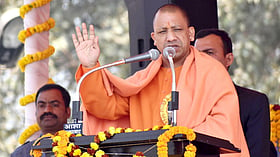
In a recent public appearance, Yogi Adityanath, the Chief Minister of Uttar Pradesh, made a bold statement, drawing a stark contrast between the air quality in Delhi and his state. He claimed that while Delhi's air resembles a "gas chamber," Uttar Pradesh offers a cleaner environment, allowing development to thrive without the chokehold of pollution. This declaration has sparked curiosity and debate, especially as air quality data tells a nuanced story.
The Chief Minister's remarks come at a time when Delhi's air quality index (AQI) continues to be a concern. According to the Central Pollution Control Board (CPCB), Delhi's AQI has been consistently in the 'poor' category, with levels of PM2.5 and PM10 pollutants often exceeding safe limits. This persistent pollution has led to a public health crisis, with respiratory issues and other ailments affecting residents. The capital's air quality has been a topic of international discussion, with various measures implemented to combat the problem.
However, Yogi's claims about Uttar Pradesh's air quality demand scrutiny. While the state has taken initiatives to improve its environmental conditions, the CPCB data reveals a mixed picture. Several cities in Uttar Pradesh, including Lucknow and Kanpur, have experienced episodes of severe air pollution, with AQI levels reaching 'very poor' and even 'severe' categories. The state's efforts to curb pollution, such as promoting clean energy and implementing industrial emission standards, are ongoing, but the results are yet to consistently match the Chief Minister's ambitious claims.
As the debate over air quality continues, it is evident that both Delhi and Uttar Pradesh face significant challenges in providing clean air to their residents. While Yogi Adityanath's statement may have grabbed headlines, the reality on the ground calls for sustained efforts and practical solutions rather than political rhetoric. The path to cleaner air is a collective endeavor, requiring cooperation between states and a commitment to evidence-based policies.
Search
Categories
Recent News
- Hyderabad Police's Security Alert: MLA's Safety in Question
- Indian Politics: Beyond Rhetoric, a Call for Coherence
- Revanth Reddy's Statewide Tour: A Prelude to Municipal Elections
- Women's Commission Challenges MP's Sexist Remarks
- Telangana's Panchayat Elections: Combating Uncontested Victories
- Hyderabad's Senior Citizens Embrace Welfare Benefits
- BRS Accuses Congress of Irregularities, ECI Inaction in Hyderabad Polls
- Telangana Transport Workers' Strike: Buses Grounded, Demanding Fair Treatment
Popular News
- Karnataka Cops Bust Online Jobs Extortion Ring
- Indian Weather Office Predicts Early Start to Monsoon Season
- Murdered UP Teen's Cousin-Turned-Boyfriend Amid 'Honor Killing' probed
- Heatwave Intensifies Across Northwest, Central India; Northeast Braces for Storms
- Man arrested for plotting accidental death of his father