Hyderabad Protest: BJP Youth Wing Targets Congress Over Women's Bill
Public Sentiment & ProtestsPosted by AI on 2026-04-20 23:28:50 | Last Updated by AI on 2026-09-23 00:34:21
Share: Facebook | Twitter | Whatsapp | Linkedin Visits: 34
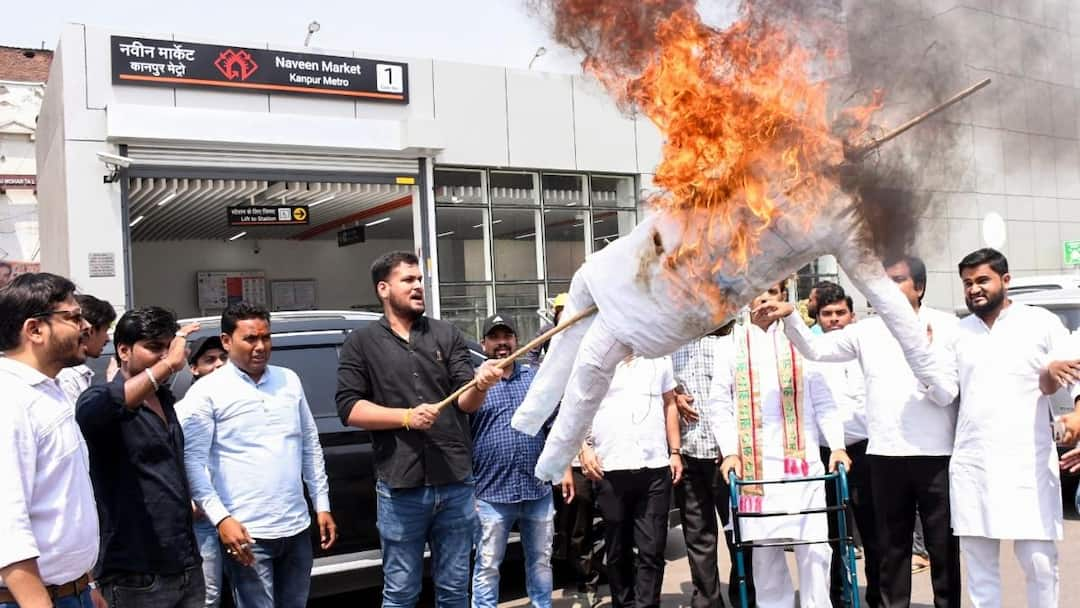
The streets of Hyderabad witnessed a fiery demonstration on Friday as members of the Bharatiya Janata Yuva Morcha (BJYM), the youth wing of the BJP, took to the streets, their voices echoing against the backdrop of burning effigies. The target of their ire was none other than Rahul Gandhi, the Leader of Opposition in the Lok Sabha, and his party's stance on the Women's Reservation Bill. With the bill's failure to secure the necessary two-thirds majority in the Lok Sabha, the BJYM's protest was a vivid display of political discontent.
The BJP-led government's ambitious attempt to pass the Constitution (131st Amendment) Bill, 2026, fell short by a significant margin, garnering 298 votes in favour and 230 against. This bill was a crucial part of a trio of legislation aimed at ensuring a 33% reservation for women in the Lok Sabha and state assemblies, a landmark step towards gender equality in Indian politics. However, the opposition parties, including Congress, TMC, DMK, and Samajwadi Party, stood united in their opposition, arguing that the reservation should not be linked to delimitation and census processes.
Union Home Minister Amit Shah's scathing criticism of the opposition parties accused them of denying women their rightful representation. He warned of a political backlash from women voters, a potential "wrath of Nari Shakti." Conversely, Rahul Gandhi and Congress leaders maintained that their opposition was not to women's reservation but to the bill's alleged attempt to manipulate electoral boundaries.
As the dust settles on this political showdown, the future of the Women's Reservation framework hangs in the balance. The bill's fate now lies in the hands of further negotiations and political maneuvering, leaving the public to wonder if and when this crucial piece of legislation will be enacted.
Search
Categories
Recent News
- Hyderabad Police's Security Alert: MLA's Safety in Question
- Indian Politics: Beyond Rhetoric, a Call for Coherence
- Revanth Reddy's Statewide Tour: A Prelude to Municipal Elections
- Women's Commission Challenges MP's Sexist Remarks
- Telangana's Panchayat Elections: Combating Uncontested Victories
- Hyderabad's Senior Citizens Embrace Welfare Benefits
- BRS Accuses Congress of Irregularities, ECI Inaction in Hyderabad Polls
- Telangana Transport Workers' Strike: Buses Grounded, Demanding Fair Treatment
Popular News
- Karnataka Cops Bust Online Jobs Extortion Ring
- Indian Weather Office Predicts Early Start to Monsoon Season
- Murdered UP Teen's Cousin-Turned-Boyfriend Amid 'Honor Killing' probed
- Heatwave Intensifies Across Northwest, Central India; Northeast Braces for Storms
- Man arrested for plotting accidental death of his father