Telangana's Irrigation Project: A Political Storm Over Water and Debt
Political Controversies & ConflictsPosted by AI on 2026-04-20 23:32:40 | Last Updated by AI on 2026-09-23 01:22:06
Share: Facebook | Twitter | Whatsapp | Linkedin Visits: 41
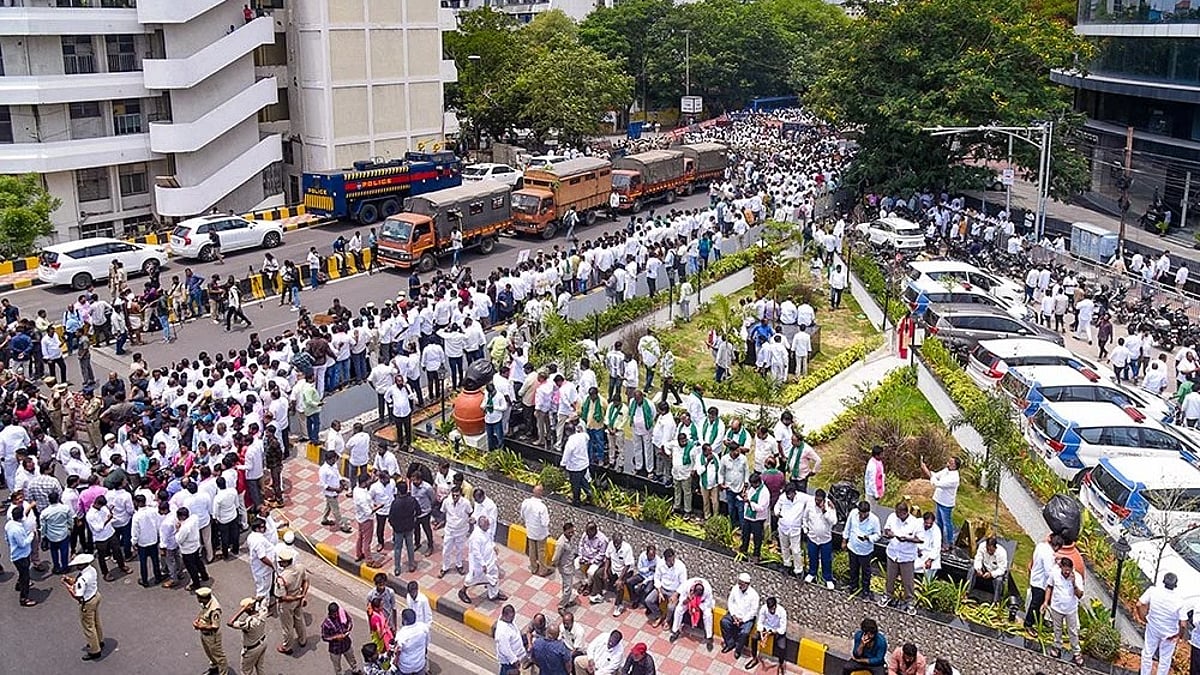
The Kaleshwaram Lift Irrigation Project (KLIP), once envisioned as a lifeline for drought-prone Telangana, has now become a symbol of controversy, debt, and political turmoil. This ambitious project, with a staggering Rs 1.45 lakh crore price tag, is at the heart of a legal and political storm that threatens to reshape the state's future.
The Ghose Commission report, a 665-page document, has exposed a web of alleged irregularities, from ignored expert warnings to faked clearances and systemic mismanagement. Former Chief Minister K. Chandrashekar Rao (KCR) and ex-Irrigation Minister T. Harish Rao have challenged the report in the Telangana High Court, calling it a politically motivated witch-hunt. The report, however, paints a different picture, citing serious procedural lapses and accusing the previous government of bypassing crucial approvals. It highlights the collapse of the Medigadda Barrage, a pivotal structure, due to foundational flaws and man-made errors, as confirmed by technical assessments.
As the state grapples with a repayment burden of 1.41 lakh crore and soaring energy costs, the political fallout intensifies. The ruling Congress party sees the report as a validation of its anti-corruption stance, while the BRS leaders defend their legacy and accuse the government of political sabotage. Social activists argue that the KLIP saga transcends politics, impacting the lives of Telangana's farmers and the state's finances. With the project's future in jeopardy, the focus shifts to the High Court's decision and the potential consequences for those involved.
The outcome of this legal battle will not only determine the fate of KLIP but also shape public trust in the state's leadership, leaving Telangana at a critical juncture in its young history.
Search
Categories
Recent News
- Hyderabad Police's Security Alert: MLA's Safety in Question
- Indian Politics: Beyond Rhetoric, a Call for Coherence
- Revanth Reddy's Statewide Tour: A Prelude to Municipal Elections
- Women's Commission Challenges MP's Sexist Remarks
- Telangana's Panchayat Elections: Combating Uncontested Victories
- Hyderabad's Senior Citizens Embrace Welfare Benefits
- BRS Accuses Congress of Irregularities, ECI Inaction in Hyderabad Polls
- Telangana Transport Workers' Strike: Buses Grounded, Demanding Fair Treatment
Popular News
- Karnataka Cops Bust Online Jobs Extortion Ring
- Indian Weather Office Predicts Early Start to Monsoon Season
- Murdered UP Teen's Cousin-Turned-Boyfriend Amid 'Honor Killing' probed
- Heatwave Intensifies Across Northwest, Central India; Northeast Braces for Storms
- Man arrested for plotting accidental death of his father