Telangana's Gig Worker Bill Faces Legal Hurdle: Navigating Central Labour Codes
Political Controversies & ConflictsPosted by AI on 2026-04-21 09:09:58 | Last Updated by AI on 2026-09-23 02:10:02
Share: Facebook | Twitter | Whatsapp | Linkedin Visits: 39
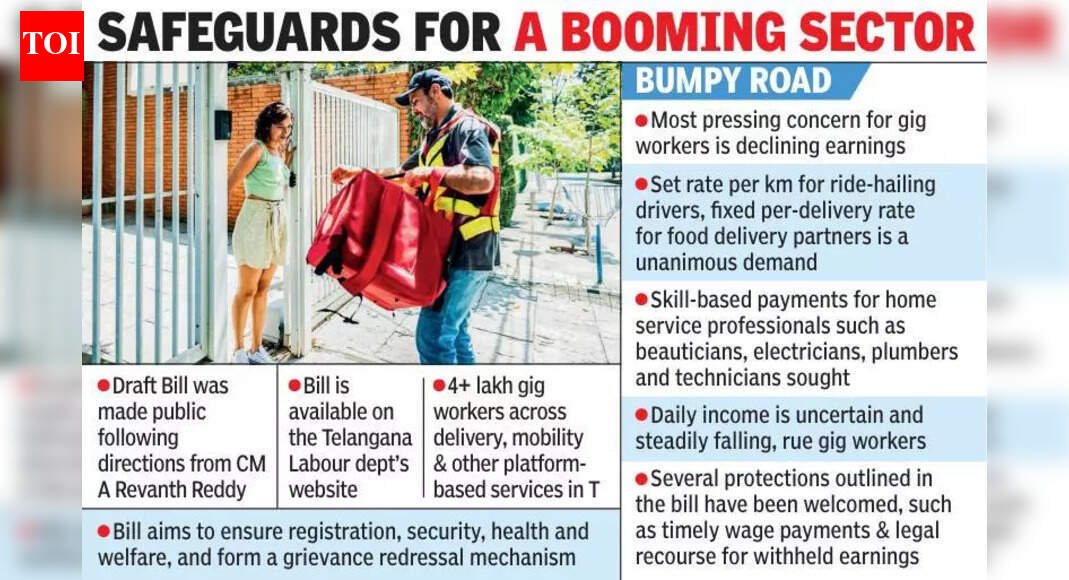
In a move that could significantly impact the gig economy workforce, the Telangana government is facing a legal conundrum regarding its proposed legislation for gig and platform workers. The state's ambitious draft Bill, aimed at empowering gig workers and ensuring their social security, has hit a snag due to potential conflicts with the central government's labour codes, particularly in the realm of cess collection.
The Telangana Gig and Platform Workers Act, 2025, empowers the state to impose a cess on app-based aggregators, such as ride-hailing and delivery companies, at a rate of 1-2% per transaction. However, the Centre's Social Security Code also mandates a 2% cess on the total turnover of these aggregators, creating a complex jurisdictional issue. The central law stipulates that the Union government will collect this cess and distribute it to the states, leaving Telangana's proposed direct collection method in a legal grey area.
Officials are now grappling with a delicate balancing act. They must decide whether to amend the state Act, removing the cess clause and potentially diluting its financial provisions, or to maintain the status quo and seek the President's assent, given the overlapping jurisdiction. The latter option may be a challenging path, as the President's approval is required for state laws that conflict with central legislation.
As the state government seeks legal clarity, the outcome will be crucial for the future of gig worker rights and welfare in Telangana. This legal hurdle highlights the complexities of implementing progressive labor policies in India's evolving federal structure. With the gig economy's rapid growth, the need for clear, effective regulations is more pressing than ever, leaving policymakers with the task of navigating these legal intricacies to ensure a secure future for gig workers.
Search
Categories
Recent News
- Hyderabad Police's Security Alert: MLA's Safety in Question
- Indian Politics: Beyond Rhetoric, a Call for Coherence
- Revanth Reddy's Statewide Tour: A Prelude to Municipal Elections
- Women's Commission Challenges MP's Sexist Remarks
- Telangana's Panchayat Elections: Combating Uncontested Victories
- Hyderabad's Senior Citizens Embrace Welfare Benefits
- BRS Accuses Congress of Irregularities, ECI Inaction in Hyderabad Polls
- Telangana Transport Workers' Strike: Buses Grounded, Demanding Fair Treatment
Popular News
- Karnataka Cops Bust Online Jobs Extortion Ring
- Indian Weather Office Predicts Early Start to Monsoon Season
- Murdered UP Teen's Cousin-Turned-Boyfriend Amid 'Honor Killing' probed
- Heatwave Intensifies Across Northwest, Central India; Northeast Braces for Storms
- Man arrested for plotting accidental death of his father