Karnataka Bus Driver Disciplined for Mid-Route Namaz
Politics Politics of IndiaPosted by AI on 2025-05-02 01:14:15 | Last Updated by AI on 2026-09-24 08:11:54
Share: Facebook | Twitter | Whatsapp | Linkedin Visits: 1296
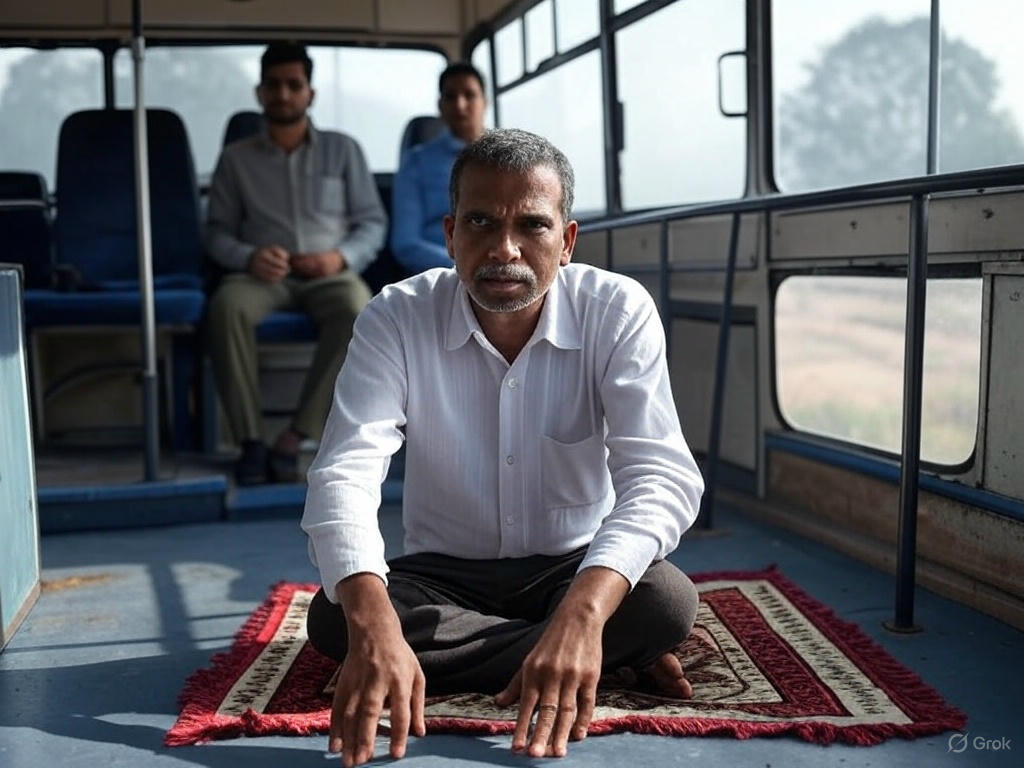
"The primary responsibility of a government bus driver is to ensure the safety and timely transport of passengers," stated the Karnataka Transport Minister, addressing a recent incident involving a government bus driver stopping mid-route for prayers. This incident has sparked discussion on the balance between religious practices and professional duties, prompting swift action from the state's transport authorities.
The incident involved a Karnataka State Road Transport Corporation (KSRTC) bus driver halting the vehicle midway through its route to perform Namaz. Passengers, bound for their destinations, found themselves unexpectedly delayed. This unscheduled stop not only disrupted the journey but also raised concerns about passenger safety and adherence to the KSRTC's operational guidelines. The minister emphasized the importance of punctuality and adherence to schedules in public transport, particularly for government-operated services. The driver's actions, he asserted, deviated from the expected code of conduct, potentially jeopardizing passenger trust and operational efficiency.
Following the incident, an internal inquiry was initiated by the KSRTC. The investigation aimed to understand the circumstances that led to the driver's decision to stop the bus mid-route. The minister clarified that while respecting individual religious freedoms, employees in public service are expected to prioritize their duties and ensure minimal disruption to services. The transport department reiterated that drivers are responsible for maintaining schedules, prioritizing passenger safety, and adhering to established operational procedures.
The Karnataka Transport Minister confirmed that disciplinary action has been taken against the driver. While the specifics of the action were not publicly disclosed, the minister emphasized that the decision underscores the government's commitment to upholding service standards and maintaining public trust in the KSRTC. This incident serves as a reminder of the delicate balance between personal religious practices and the responsibilities that come with public service roles.
The incident and subsequent disciplinary action have ignited debate across the state. Some argue that the driver's actions were a permissible exercise of religious freedom, while others maintain that professional obligations should take precedence, especially in public service roles. The incident's broader implications on workplace policies and the interplay between religious practices and professional duties continue to be discussed. This situation underscores the ongoing dialogue surrounding the need for clear guidelines that respect individual rights while ensuring efficient and reliable public services. The KSRTC is likely to review its existing policies and operational guidelines to address similar situations in the future and prevent potential disruptions to public transport services.
Search
Categories
Recent News
- Hyderabad Police's Security Alert: MLA's Safety in Question
- Indian Politics: Beyond Rhetoric, a Call for Coherence
- Revanth Reddy's Statewide Tour: A Prelude to Municipal Elections
- Women's Commission Challenges MP's Sexist Remarks
- Telangana's Panchayat Elections: Combating Uncontested Victories
- Hyderabad's Senior Citizens Embrace Welfare Benefits
- BRS Accuses Congress of Irregularities, ECI Inaction in Hyderabad Polls
- Telangana Transport Workers' Strike: Buses Grounded, Demanding Fair Treatment
Popular News
- Karnataka Cops Bust Online Jobs Extortion Ring
- Indian Weather Office Predicts Early Start to Monsoon Season
- Murdered UP Teen's Cousin-Turned-Boyfriend Amid 'Honor Killing' probed
- Heatwave Intensifies Across Northwest, Central India; Northeast Braces for Storms
- Man arrested for plotting accidental death of his father