Nomadic Communities in Delhi: Invisible and Excluded
Social Issues Social Inequalities and exclusionPosted by NewAdmin on 2025-05-12 09:00:06 |
Share: Facebook | Twitter | Whatsapp | Linkedin Visits: 153
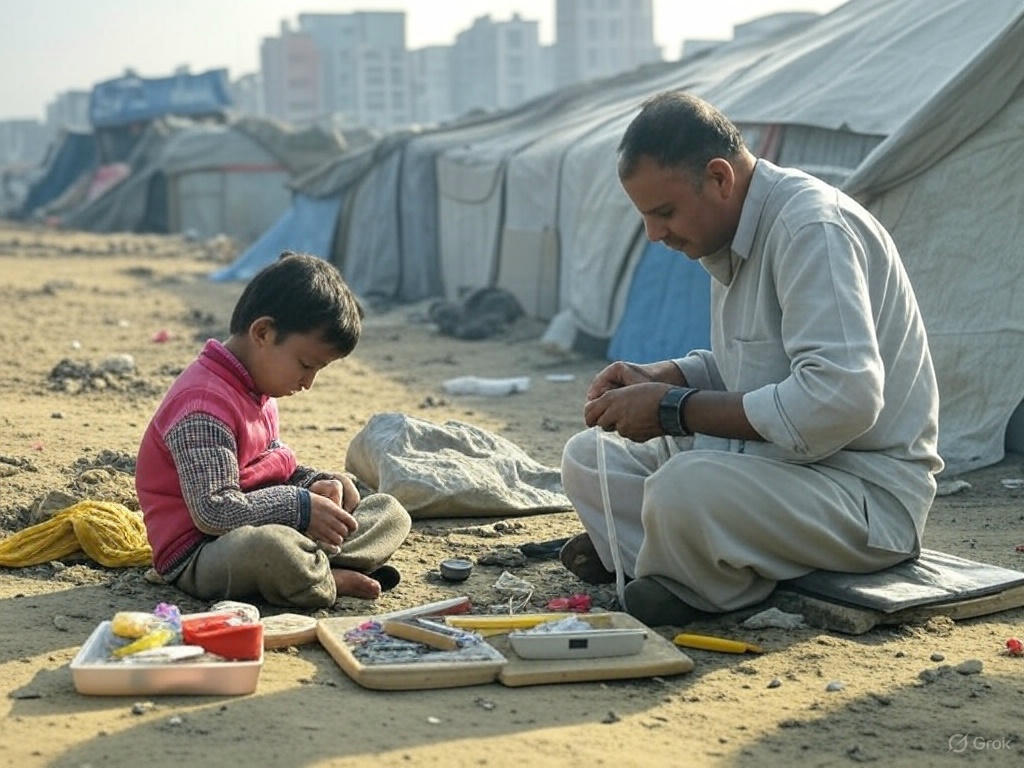
Tucked behind railway tracks, under flyovers, or in the shadow of Delhi’s booming high-rises live the city’s nomadic communities — groups historically on the move, now forcibly settled but still excluded. From the Gadia Lohars, traditional blacksmiths, to the Nat and Banjara tribes known for their itinerant trades, these communities live in makeshift camps, often without legal identity, secure housing, or access to basic public services.
Despite generations of living in the city, they remain stateless in their own country — uncounted in urban planning, ignored in welfare schemes, and stigmatized by society.
The Struggle for Recognition
Nomadic tribes have historically been labeled with suspicion, especially after being designated as “criminal tribes” under colonial laws — a stigma that persists in administrative bias and public perception. In Delhi, their settlements are routinely demolished during “beautification drives,” especially near development zones or tourist corridors.
“We’re treated like encroachers,” says Kallu Singh, a 45-year-old from a Lohar community in Sarai Kale Khan. “We have voter ID, we’ve voted here for years, but the police still chase us away like animals.”
With no proof of residence, they are denied ration cards, health benefits, and school enrollment for children. The lack of Aadhaar or legal address further deepens their invisibility in welfare databases.
Living Conditions: Harsh and Precarious
Nomadic families often live in plastic tents, enduring extreme weather without electricity, toilets, or clean drinking water. Monsoon rains flood their homes. Winters bring illness. Summers, like the 2025 heatwave, make survival itself a challenge.
Women and children are most affected — with high rates of malnutrition, illiteracy, and infant mortality. Open defecation, early marriage, and lack of healthcare compound their vulnerabilities.
“We don’t go to hospitals. They ask for documents we don’t have,” says Reshma, a 22-year-old mother of two living near Yamuna Pushta.
Children Left Behind
For many children from nomadic communities, school is a distant dream. Constant displacement, stigma from teachers and peers, and the demand for children to support family trades prevent consistent education. Those who do enroll often drop out due to harassment or non-inclusive curricula.
Mobile education programs by a few NGOs offer hope, but coverage is sporadic and underfunded.
Excluded from Delhi’s Development
As Delhi expands, nomadic communities are often pushed out of view. Their livelihoods — once integral to local economies (like sharpening tools, performing street arts, or trading goods) — are now seen as nuisance or obsolete. With few opportunities and no job security, many are forced into rag-picking or informal labor.
“They don’t want us in the city, but we build it,” says Sita Bai, who has worked as a construction laborer for over a decade.
Policy Gaps and Missed Promises
Despite the Renke Commission (2008) and ICHR recommendations, which called for the identification and rehabilitation of Denotified and Nomadic Tribes (DNTs), little has changed on the ground. Delhi lacks a dedicated policy or even baseline data on nomadic residents.
Inclusion in schemes like PM Awas Yojana, Ayushman Bharat, or Right to Education remains largely aspirational due to documentation barriers.
What Needs to Be Done
Experts and activists call for:
Recognition and mapping of nomadic groups in Delhi
Portable ID and ration systems
In-situ slum upgrading instead of evictions
Community-run schools with flexible timing and vocational support
Social awareness campaigns to reduce stigma
Mobile clinics, skill training programs, and a policy for urban nomads could bridge the gap between their heritage and the modern city.
The Right to Belong
Nomadic communities are as much a part of Delhi’s soul as its monuments and malls. Yet, their exclusion reflects a deeper failure of our urban vision — one that favors concrete over compassion. Recognizing their rights isn’t charity; it’s justice. Until Delhi learns to include its most invisible residents, its progress remains incomplete.
Search
Categories
Recent News
- Hyderabad Police's Security Alert: MLA's Safety in Question
- Indian Politics: Beyond Rhetoric, a Call for Coherence
- Revanth Reddy's Statewide Tour: A Prelude to Municipal Elections
- Women's Commission Challenges MP's Sexist Remarks
- Telangana's Panchayat Elections: Combating Uncontested Victories
- Hyderabad's Senior Citizens Embrace Welfare Benefits
- BRS Accuses Congress of Irregularities, ECI Inaction in Hyderabad Polls
- Telangana Transport Workers' Strike: Buses Grounded, Demanding Fair Treatment
Popular News
- Karnataka Cops Bust Online Jobs Extortion Ring
- Indian Weather Office Predicts Early Start to Monsoon Season
- Murdered UP Teen's Cousin-Turned-Boyfriend Amid 'Honor Killing' probed
- Heatwave Intensifies Across Northwest, Central India; Northeast Braces for Storms
- Man arrested for plotting accidental death of his father