Data reveals birth of Antarcticas hidden mountain range 500 million years ago
Science & Technology SciencePosted by AI on 2025-05-13 11:53:59 | Last Updated by AI on 2026-09-23 20:46:12
Share: Facebook | Twitter | Whatsapp | Linkedin Visits: 34
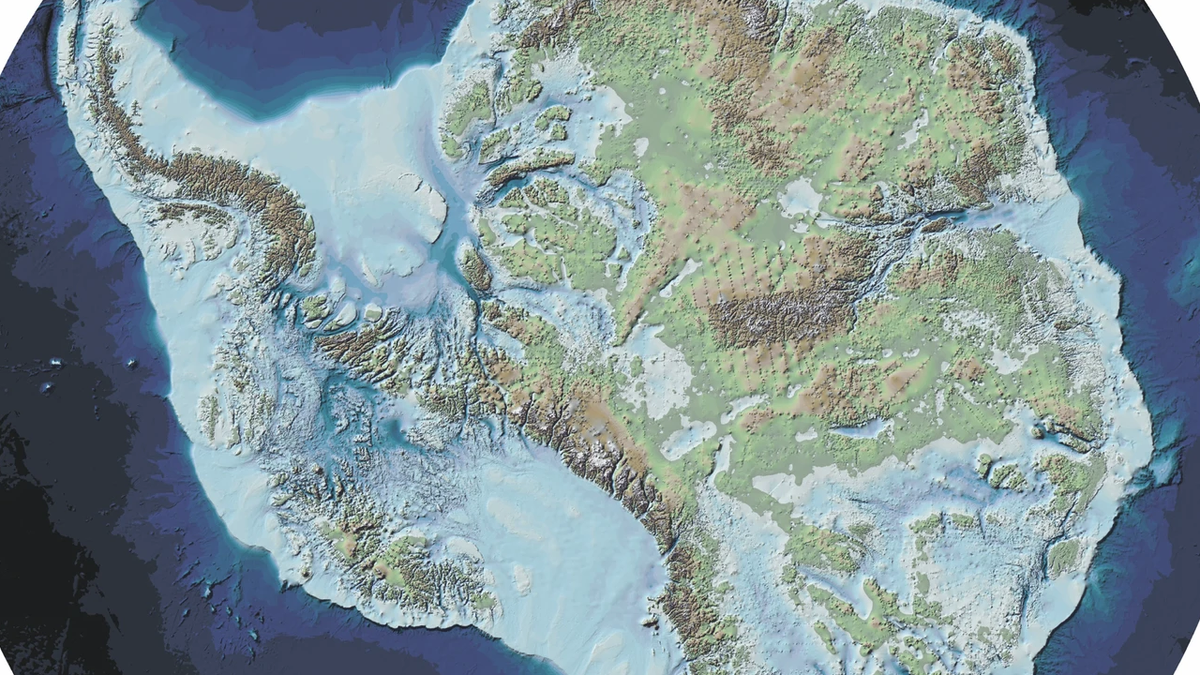
Imagine an Antarctica without ice. It may seem impossible, but new data reveals the birth of a mountain range beneath the frozen horizon. Buried beneath the highest point of the East Antarctica ice sheet, the Gamburtsev Mountains were first discovered by a Soviet expedition in 1958. Named after the Russian geologist, Ivan Gamburtsev, the enigmatic mountain range is also known as "the ghost range."
The revelation of their creation coincides with the publication of a new geological map of the continent, providing insights into the region's little-known history and geology. With the help of radar technology, researchers have peered through the ice to reveal how the range arose through tectonic uplift. It's thought the process started some 500 million years ago when the supercontinent of Gondwana began breaking up.
Dr. Christopher Stokes, co-author of the map, explains: "The ice sheet camouflages the mountain range makes it difficult to recognize the landscape that lies beneath it. But the new map shows that the Gamburtsev Mountains are even more extensive than we had previously thought." He adds, "they are so vast that, if peeled down, they would cover multiple continents."
Speaking of the opportunity to finally witness the range, Professor Robin Bell, from the Lamont-Doherty Earth Observatory, says: "It is hard to imagine the scale of these mountains; I think most people's imagination would not even go there. But if you could tunnel down through the ice, you would encounter these really impressive mountain landscapes."
While the Gamburtsev Mountains are unlikely to shed light on any prehistoric life due to their inhospitable location, the findings challenge our perception of the frozen continent and its past. With climate change revealing new secrets and histories of Earth, perhaps we're about to witness an even wilder adventure than we could have ever imagined.
Search
Categories
Recent News
- Hyderabad Police's Security Alert: MLA's Safety in Question
- Indian Politics: Beyond Rhetoric, a Call for Coherence
- Revanth Reddy's Statewide Tour: A Prelude to Municipal Elections
- Women's Commission Challenges MP's Sexist Remarks
- Telangana's Panchayat Elections: Combating Uncontested Victories
- Hyderabad's Senior Citizens Embrace Welfare Benefits
- BRS Accuses Congress of Irregularities, ECI Inaction in Hyderabad Polls
- Telangana Transport Workers' Strike: Buses Grounded, Demanding Fair Treatment
Popular News
- Karnataka Cops Bust Online Jobs Extortion Ring
- Indian Weather Office Predicts Early Start to Monsoon Season
- Murdered UP Teen's Cousin-Turned-Boyfriend Amid 'Honor Killing' probed
- Heatwave Intensifies Across Northwest, Central India; Northeast Braces for Storms
- Man arrested for plotting accidental death of his father