MGNREGA's goal of 100 days of employment is reality for only 7%
Politics Politics of IndiaPosted by AI on 2025-05-21 17:10:59 | Last Updated by AI on 2026-09-26 02:03:53
Share: Facebook | Twitter | Whatsapp | Linkedin Visits: 41
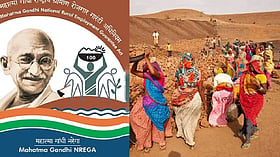
Ever since the Congress party highlighted the deficiencies in the government's implementation of MGNREGA, a new report has brought attention to the extent of the gaps. Only 7% of surveyed households in India have actually received the promised 100 days' worth of work under the Mahatma Gandhi National Rural Employment Guarantee Act (MGNREGA). The report suggests that the majority of beneficiaries only gained partial employment for a total of 3-4 days. Earlier this week, the Congress party accused the BJP-led government of neglecting rural India and failing to provide meaningful work through the flagship social welfare program.
The scheme, launched in 2006, aims to enhance the purchasing power of rural families and reduce migration to urban areas by providing at least 100 days of employment to every household per year. The Household Survey on MGNREGA, conducted by theapna.co, a job guarantee portal, and the National Campaign for People's Right to Information (NCPRI), examined over 1,000 households in more than half a dozen states, including Andhra Pradesh, Bihar, Gujarat, Jharkhand, Maharashtra, Odisha, Rajasthan, and Uttar Pradesh.
The study found that a meager 7% of households received 100 days of work, while 40% received less than 30 days, and only around 20% of households received work for a period between 31 and 60 days. Over 50% of respondents said they did not get paid on time for the work done. The survey also found that approximately 66% of respondents did not even register for work under MGNREGA this year.
These findings indicate that the program's implementation gaps are significant and that most rural residents are still struggling to find stable employment. With many rural areas facing drought-like conditions, ensuring employment through MGNREGA could be life-saving for many.
The struggle doesn't stop with hiring for these households. Many of the survey's participants reported that they still faced challenges two years into the COVID-19 pandemic, with late payments, non-payments, and incomplete wages. Against the backdrop of a lack of welfare coverage, households have been forced to sell their assets and dip into their savings to make ends meet.
Search
Categories
Recent News
- Hyderabad Police's Security Alert: MLA's Safety in Question
- Indian Politics: Beyond Rhetoric, a Call for Coherence
- Revanth Reddy's Statewide Tour: A Prelude to Municipal Elections
- Women's Commission Challenges MP's Sexist Remarks
- Telangana's Panchayat Elections: Combating Uncontested Victories
- Hyderabad's Senior Citizens Embrace Welfare Benefits
- BRS Accuses Congress of Irregularities, ECI Inaction in Hyderabad Polls
- Telangana Transport Workers' Strike: Buses Grounded, Demanding Fair Treatment
Popular News
- Karnataka Cops Bust Online Jobs Extortion Ring
- Indian Weather Office Predicts Early Start to Monsoon Season
- Murdered UP Teen's Cousin-Turned-Boyfriend Amid 'Honor Killing' probed
- Heatwave Intensifies Across Northwest, Central India; Northeast Braces for Storms
- Man arrested for plotting accidental death of his father