TACO Trade: How Trump’s Tariff Flip-Flops Are Fueling Market Profits
International International NewsPosted by NewAdmin on 2025-05-29 08:58:53 |
Share: Facebook | Twitter | Whatsapp | Linkedin Visits: 42
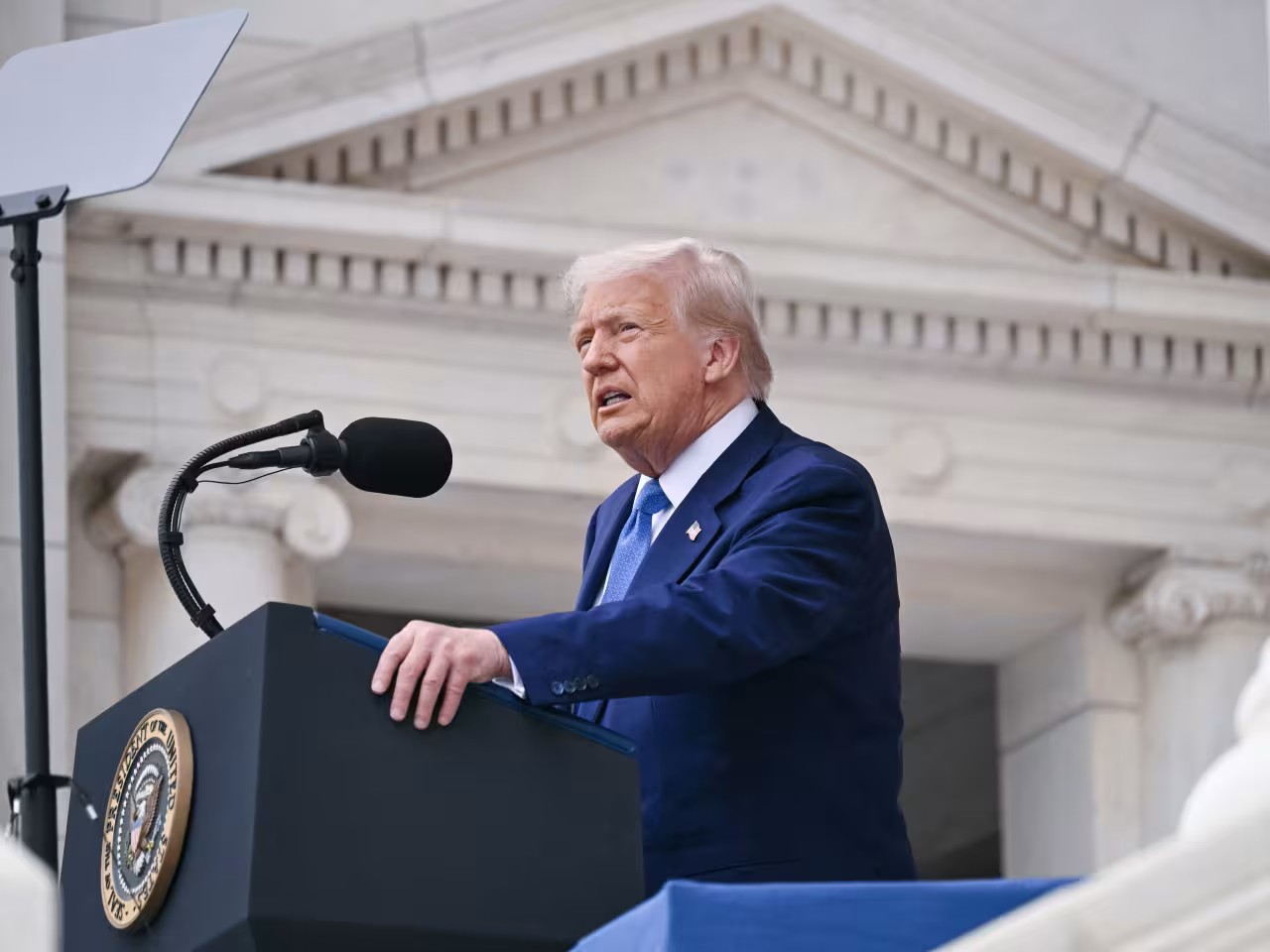
The term "TACO trade" has emerged as a cheeky but increasingly relevant term on Wall Street, used to describe a recurring trading strategy tied to the unpredictable tariff policies of U.S. President Donald Trump. Coined by Financial Times columnist Robert Armstrong, TACO stands for "Trump Always Chickens Out." The term captures a pattern in Trump's trade behavior, where he makes dramatic and sweeping tariff announcements that initially roil financial markets, only to later delay, reduce, or completely roll them back under political or economic pressure.
This cycle has repeated itself several times, giving investors a blueprint for short-term profit. The typical sequence begins with a tariff threat that sends equity markets into a sharp decline. Savvy traders then buy the dip, betting that Trump will soften his stance as the economic fallout becomes more evident. When Trump ultimately backtracks or pauses the proposed tariffs, the markets rebound, allowing those investors to cash in on the recovery. This repeated sequence has come to be known as the TACO trade cycle: threat, panic, retreat, rally.
One of the most prominent recent examples occurred on April 2, dubbed "Liberation Day" by Trump, when the U.S. imposed tariffs on imports from over 60 countries. The announcement triggered a steep sell-off in global markets, with the S&P 500 losing over $6 trillion in value in two days. However, within a week, Trump paused the tariffs for 90 days to allow for negotiations, and markets began to recover. This pattern repeated again on May 23, when Trump declared 50 percent tariffs on European Union goods, only to delay them by July 9 after discussions with European Commission President Ursula von der Leyen, leading to another sharp market rebound.
When asked about the TACO theory, Trump dismissed the idea that his actions represent retreat or indecision. He argued that what critics see as backtracking is actually strategic negotiation, designed to compel other countries into trade talks. Nonetheless, analysts and traders have increasingly recognized the TACO trade as a viable, albeit risky, strategy to profit from market volatility induced by the White House’s trade brinkmanship. While it capitalizes on short-term movements, it also highlights the broader uncertainty and instability injected into global markets by erratic policy swings.
Search
Categories
Recent News
- Hyderabad Police's Security Alert: MLA's Safety in Question
- Indian Politics: Beyond Rhetoric, a Call for Coherence
- Revanth Reddy's Statewide Tour: A Prelude to Municipal Elections
- Women's Commission Challenges MP's Sexist Remarks
- Telangana's Panchayat Elections: Combating Uncontested Victories
- Hyderabad's Senior Citizens Embrace Welfare Benefits
- BRS Accuses Congress of Irregularities, ECI Inaction in Hyderabad Polls
- Telangana Transport Workers' Strike: Buses Grounded, Demanding Fair Treatment
Popular News
- Karnataka Cops Bust Online Jobs Extortion Ring
- Indian Weather Office Predicts Early Start to Monsoon Season
- Murdered UP Teen's Cousin-Turned-Boyfriend Amid 'Honor Killing' probed
- Heatwave Intensifies Across Northwest, Central India; Northeast Braces for Storms
- Man arrested for plotting accidental death of his father