Mining Ban Near Chittorgarh Fort
Current Affairs NationalPosted by newadmin on 2025-04-10 08:36:34 |
Share: Facebook | Twitter | Whatsapp | Linkedin Visits: 74
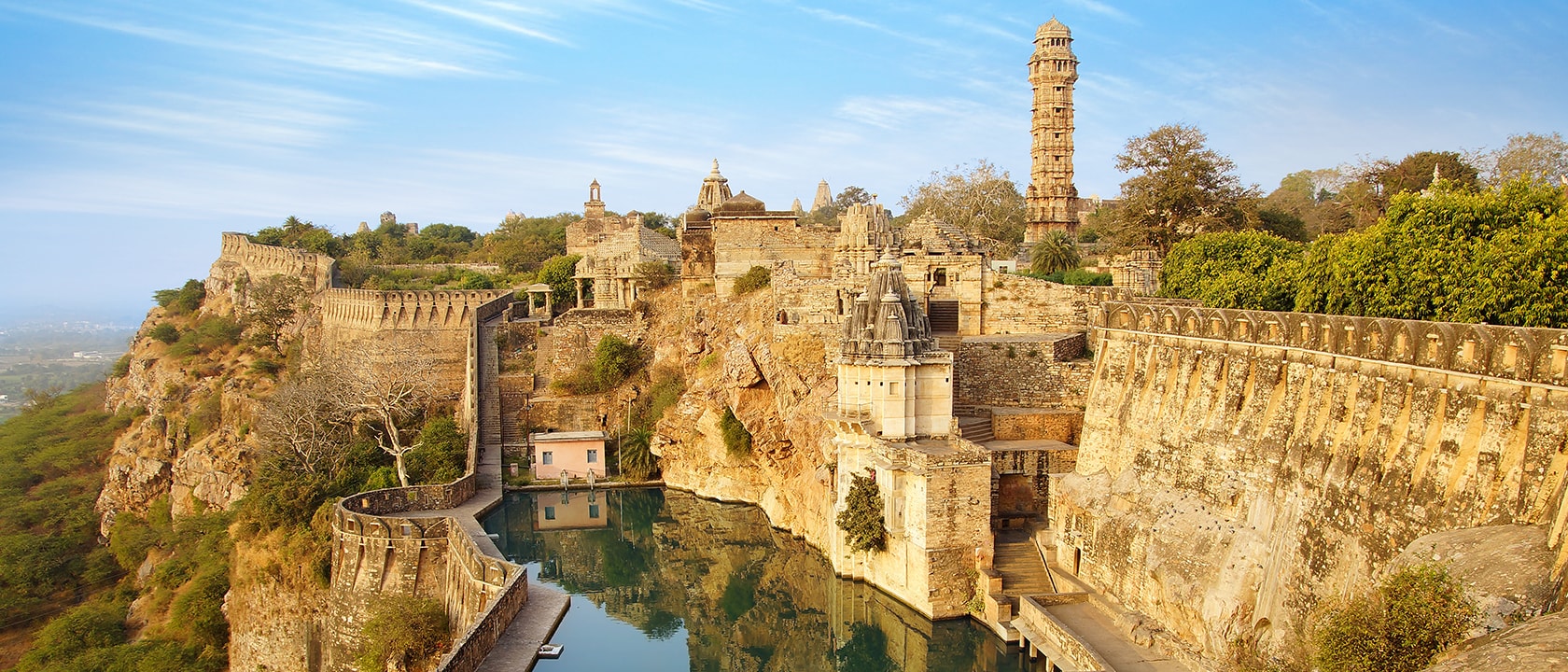
The Rajasthan government is currently considering a total ban on mining within a 10-kilometre radius of the historic Chittorgarh Fort. This iconic site, recognized as a UNESCO World Heritage landmark, has become the centre of an ongoing legal conflict between Birla Corporation Limited and the state. The case dates back to a 2012 ruling by the Rajasthan High Court, which imposed a ban on mining and blasting near the fort due to concerns over structural damage and environmental degradation. Since then, the matter has escalated to the Supreme Court.
Chittorgarh Fort stands as one of India's most expansive and culturally significant forts, spreading across a 700-acre area. The complex houses 65 heritage structures, which include approximately 20 large temples, several palaces, memorials, and towers. Notable among them are the celebrated Rani Padmini’s Palace, the Fateh Prakash Palace Museum, and the soaring Vijay Stambh that commemorates historical victories. These monuments collectively contribute to the fort’s status as a symbol of Rajput pride and resistance.
The legal issues surrounding the fort intensified after the Rajasthan High Court's 2012 verdict, which was aimed at protecting the monument’s integrity. Birla Corporation Limited challenged this decision, resulting in the case being brought before the Supreme Court. In response, the apex court ordered a scientific evaluation by the Indian Institute of Technology – Indian School of Mines, Dhanbad, to assess the possible impacts of mining in the surrounding area.
The IIT-ISM study, submitted in January 2024, concluded that controlled blasting beyond a five-kilometre radius might not pose a threat to the structural stability of the fort. However, this report drew significant backlash. Critics pointed out major shortcomings in the methodology, claiming that the study lacked adherence to scientific standards and failed to conduct proper soil and rock structure analyses. Additionally, the term “controlled blasting” was criticized for being ambiguously defined and unsupported by adequate data or long-term assessments.
Concerns have also been raised by prominent research and heritage institutions. The Central Building Research Institute and the Archaeological Survey of India have both highlighted the fort’s delicate condition and its susceptibility to even minor vibrations caused by mining activities. Their evaluations have emphasized the potential dangers of continuing mining operations in proximity to such a historic and vulnerable structure.
Environmental degradation is another major issue associated with ongoing mining activities near the fort. Rivers like Bedach and Gambhiri, which flow through the region, have reportedly been affected by mining-related pollution. Residents and environmentalists have voiced their concerns in public hearings, noting violations of the Water (Prevention and Control of Pollution) Act, 1974, due to unchecked industrial discharge and habitat disruption.
Chittorgarh district hosts large-scale mining operations, particularly in limestone extraction. Major mining leases extend over 4,360 hectares, producing more than 11 million tonnes of limestone annually. Additionally, minor mineral leases cover another 260 hectares, yielding around 5.2 million tonnes each year through open-cast methods. The magnitude of these operations has intensified worries regarding environmental sustainability and the safety of historic structures like Chittorgarh Fort.
As the Supreme Court continues to deliberate, the future of mining near this historic site remains uncertain. What is clear, however, is the growing consensus among conservationists, researchers, and environmental experts that more stringent measures are needed to protect one of India’s most treasured heritage landmarks.
Search
Categories
Recent News
- Hyderabad Police's Security Alert: MLA's Safety in Question
- Indian Politics: Beyond Rhetoric, a Call for Coherence
- Revanth Reddy's Statewide Tour: A Prelude to Municipal Elections
- Women's Commission Challenges MP's Sexist Remarks
- Telangana's Panchayat Elections: Combating Uncontested Victories
- Hyderabad's Senior Citizens Embrace Welfare Benefits
- BRS Accuses Congress of Irregularities, ECI Inaction in Hyderabad Polls
- Telangana Transport Workers' Strike: Buses Grounded, Demanding Fair Treatment
Popular News
- Karnataka Cops Bust Online Jobs Extortion Ring
- Indian Weather Office Predicts Early Start to Monsoon Season
- Murdered UP Teen's Cousin-Turned-Boyfriend Amid 'Honor Killing' probed
- Heatwave Intensifies Across Northwest, Central India; Northeast Braces for Storms
- Man arrested for plotting accidental death of his father