Beyond Worship: Anand Teltumbde on Ambedkar's True Legacy and Political Appropriation
Politics Politics of IndiaPosted by NewAdmin on 2025-04-11 08:56:41 |
Share: Facebook | Twitter | Whatsapp | Linkedin Visits: 51
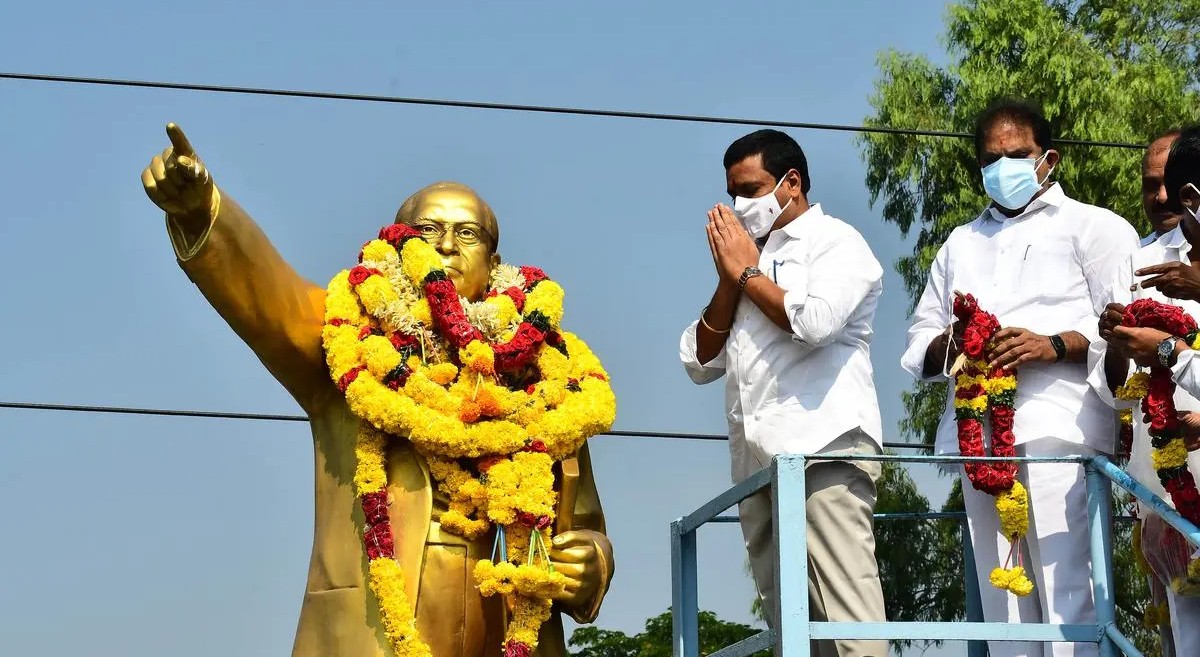
In a powerful and insightful reflection, leading Dalit scholar and public intellectual Anand Teltumbde delves into the legacy of Dr. B.R. Ambedkar, cautioning against the growing trend of idolizing the icon while ignoring his core values. Speaking on the occasion of his recent book Iconoclast: A Reflective Biography of Dr Babasaheb Ambedkar, Teltumbde warns that the reverence towards Ambedkar has become superficial and politically motivated, rather than rooted in his radical ideals of liberty, equality, and fraternity.
Teltumbde notes that Ambedkar worship began gaining momentum in the late 1960s with the rise of competitive electoral politics. As Congress influence waned after Nehru, political parties began using Ambedkar’s image to sway Dalit votes. According to Teltumbde, the Dalit vote bank, comprising over 220 million people, became an easy target, with parties using Ambedkar’s photo and name without truly committing to his values.
He particularly highlights how the BJP, under the RSS's ideological leadership, strategically co-opted Ambedkar’s legacy to gain a foothold among marginalized communities. However, Teltumbde argues this appropriation ignores Ambedkar’s open opposition to Hinduism and Hindutva ideologies. He recalls that Ambedkar had explicitly stated he would not associate with parties like the Hindu Mahasabha, Jan Sangh, or the RSS. He was also critical of the Congress and communists, yet his eventual entry into the Constituent Assembly was facilitated by Congress under political compulsion after Partition.
Teltumbde laments that while Ambedkar’s image is widely celebrated today, his progressive ideals are being sidelined. “Worship is easy,” he says, “you hang up a photo, garland it, and forget it.” For Teltumbde, this ritualistic veneration erases the true Ambedkar—a revolutionary thinker who challenged caste, religion, and societal structures to envision a modern and just India.
Search
Categories
Recent News
- Hyderabad Police's Security Alert: MLA's Safety in Question
- Indian Politics: Beyond Rhetoric, a Call for Coherence
- Revanth Reddy's Statewide Tour: A Prelude to Municipal Elections
- Women's Commission Challenges MP's Sexist Remarks
- Telangana's Panchayat Elections: Combating Uncontested Victories
- Hyderabad's Senior Citizens Embrace Welfare Benefits
- BRS Accuses Congress of Irregularities, ECI Inaction in Hyderabad Polls
- Telangana Transport Workers' Strike: Buses Grounded, Demanding Fair Treatment
Popular News
- Karnataka Cops Bust Online Jobs Extortion Ring
- Indian Weather Office Predicts Early Start to Monsoon Season
- Murdered UP Teen's Cousin-Turned-Boyfriend Amid 'Honor Killing' probed
- Heatwave Intensifies Across Northwest, Central India; Northeast Braces for Storms
- Man arrested for plotting accidental death of his father