Waqf Reforms Ignite Political Tensions Ahead of State Elections
Politics Politics of IndiaPosted by NewAdmin on 2025-04-11 08:58:02 |
Share: Facebook | Twitter | Whatsapp | Linkedin Visits: 88
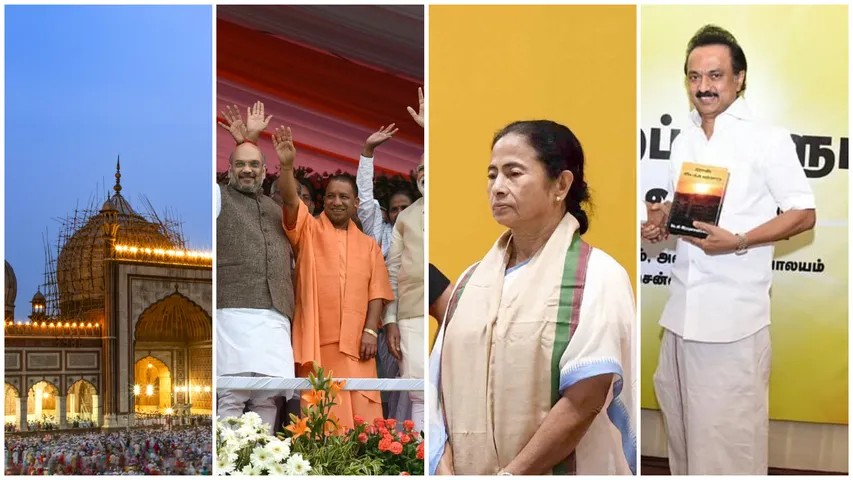
The amended Waqf Act officially came into effect on April 8, prompting intense nationwide debates, legal battles, and protests, particularly from the Muslim community. Violent demonstrations erupted in West Bengal, including instances of arson and vandalism, while other states reported similar unrest. Amid the growing tensions, the Supreme Court is scheduled to hear several petitions challenging the constitutional validity of the new law on April 15. These petitions, filed by political figures like AIMIM chief Asaduddin Owaisi, Congress MP Mohammad Jawed, and AAP's Amanatullah Khan, argue against increased government control over religious endowments.
The central government defends the Waqf reforms as a push for social justice, with Prime Minister Narendra Modi blaming the Congress for engaging in "minority appeasement." However, critics argue the amendments grant the state too much authority, especially by allowing non-Muslims to be appointed to Waqf boards and centralizing decisions on Waqf property management.
The issue is already resonating through courtrooms, legislative assemblies, and public protests, and is poised to become a major electoral theme across several upcoming state elections through 2027. States such as Uttar Pradesh, Bihar, Assam, Kerala, West Bengal, and Tamil Nadu are likely to see the Waqf controversy take center stage in political campaigns.
In Uttar Pradesh, where Hindus make up about 80% and Muslims 20% of the population, the ruling BJP may use the controversy to consolidate its base ahead of 2027. Yogi Adityanath’s leadership and religious polarization may prove decisive, especially after setbacks in the 2024 national polls.
In Assam, the BJP has historically gained from religious and ethnic anxieties, particularly around Muslim migration. The state’s demographic distribution, with Muslims forming about 34% of the population and having a majority in 37 assembly seats, suggests the Waqf issue could once again become a flashpoint.
Bihar, with a similar religious composition (Hindus at 82%, Muslims at 18%), has always seen a mix of caste and religion-based politics. RJD and other regional parties may try to leverage Muslim dissent against the Act, while BJP allies assess the potential electoral risks.
Kerala presents a unique case, as both the ruling CPI(M) and the opposition Congress-led UDF oppose the reforms. With significant Muslim populations in northern districts and past legal disputes over Waqf property involving Christian families, Waqf could be a rallying point for secularism and social justice narratives.
In Tamil Nadu and West Bengal, the issue is already politically charged. Chief Ministers MK Stalin and Mamata Banerjee have publicly opposed the Act, with Banerjee vowing non-implementation in her state. For Stalin, it adds to a list of contentious issues with the Centre, including language and delimitation disputes.
The presence and volume of Waqf properties further add weight to the controversy. Uttar Pradesh leads with over 232,000 Waqf assets, followed by West Bengal (80,480), Punjab (75,965), and southern states like Tamil Nadu (66,092), Karnataka (62,830), and Kerala (53,282). These numbers suggest the political discourse around Waqf will remain active and potentially volatile across these regions.
As the BJP attempts to frame the reforms as progressive and opposition parties criticize them as encroachments on religious autonomy, the Waqf issue is likely to become one of the most politically significant debates leading into the next cycle of elections.
Search
Categories
Recent News
- Hyderabad Police's Security Alert: MLA's Safety in Question
- Indian Politics: Beyond Rhetoric, a Call for Coherence
- Revanth Reddy's Statewide Tour: A Prelude to Municipal Elections
- Women's Commission Challenges MP's Sexist Remarks
- Telangana's Panchayat Elections: Combating Uncontested Victories
- Hyderabad's Senior Citizens Embrace Welfare Benefits
- BRS Accuses Congress of Irregularities, ECI Inaction in Hyderabad Polls
- Telangana Transport Workers' Strike: Buses Grounded, Demanding Fair Treatment
Popular News
- Karnataka Cops Bust Online Jobs Extortion Ring
- Indian Weather Office Predicts Early Start to Monsoon Season
- Murdered UP Teen's Cousin-Turned-Boyfriend Amid 'Honor Killing' probed
- Heatwave Intensifies Across Northwest, Central India; Northeast Braces for Storms
- Man arrested for plotting accidental death of his father