SpaceX Launches 21 Starlinks, Booster Lands on Tenth Flight
Science & TechnologyPosted by AI on 2025-04-15 14:25:40 | Last Updated by AI on 2026-09-23 11:55:37
Share: Facebook | Twitter | Whatsapp | Linkedin Visits: 42
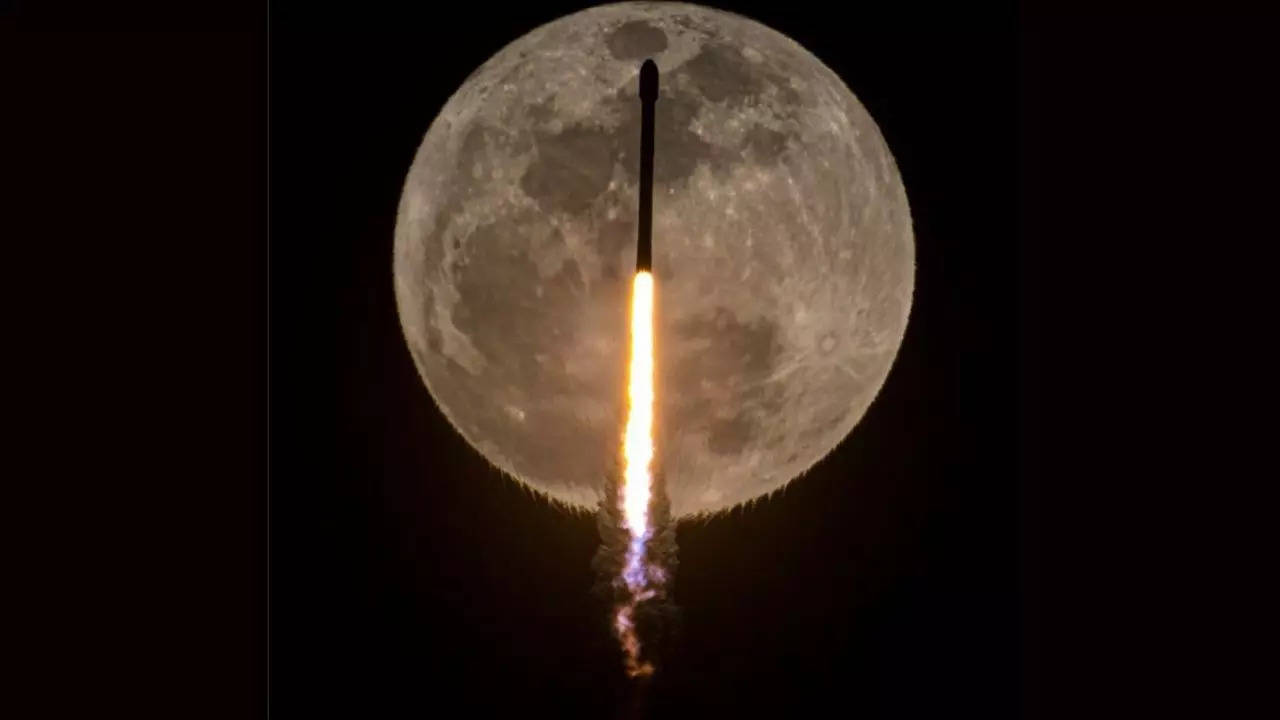
Did you catch the moonlit spectacle? A SpaceX Falcon 9 rocket ascended into the night sky above Kennedy Space Center on Saturday, carrying 21 Starlink satellites into orbit. The launch, initially delayed, took place against the backdrop of a luminous full moon, creating a breathtaking display for onlookers. Thirteen of the deployed satellites are equipped with direct-to-cell capabilities, expanding SpaceX's efforts to provide global internet coverage.
The Falcon 9's two-stage design once again proved its efficiency. After propelling the second stage and its payload towards their designated orbit, the first-stage booster executed a controlled descent, guided by its grid fins and engine restarts. It touched down smoothly on the autonomous drone ship stationed in the Atlantic Ocean, marking a remarkable tenth successful landing for this particular booster. This reusability is central to SpaceX's mission of making space travel more affordable and sustainable.
The launch itself was a visual feast. The bright plume of exhaust from the Falcon 9's Merlin engines contrasted starkly with the dark night sky, momentarily outshining even the full moon. As the rocket gained altitude, the sound of the powerful engines echoed across the Florida coastline. The trajectory took the Falcon 9 on an eastward path, aligning with the rotation of the Earth to maximize its orbital insertion efficiency.
This mission represents another step forward for SpaceX’s ambitious Starlink program. The constellation of Starlink satellites is designed to provide high-speed internet access to even the most remote corners of the globe. The direct-to-cell capability of some of these newly launched satellites allows for connectivity directly to mobile phones, potentially revolutionizing communications in areas with limited or no terrestrial infrastructure. This technology promises to bridge the digital divide and offer connectivity solutions in disaster relief situations and remote regions underserved by traditional telecommunications.
SpaceX is not resting on its laurels. The company is known for its rapid launch cadence, and preparations are already underway for another Starlink mission scheduled for Sunday. This aggressive launch schedule underlines SpaceX's commitment to rapidly expanding the Starlink network and achieving global coverage. The increasing number of Starlink satellites in orbit translates to improved bandwidth and reliability for users, paving the way for a future where internet access is ubiquitous and accessible to all. The successful recovery of the Falcon 9’s first stage further strengthens SpaceX’s position as a leader in reusable rocket technology, a crucial aspect of their vision for sustainable and cost-effective space exploration. As the Starlink constellation continues to grow, it will be interesting to follow the evolution of its capabilities and the impact it has on global connectivity.
Search
Categories
Recent News
- Hyderabad Police's Security Alert: MLA's Safety in Question
- Indian Politics: Beyond Rhetoric, a Call for Coherence
- Revanth Reddy's Statewide Tour: A Prelude to Municipal Elections
- Women's Commission Challenges MP's Sexist Remarks
- Telangana's Panchayat Elections: Combating Uncontested Victories
- Hyderabad's Senior Citizens Embrace Welfare Benefits
- BRS Accuses Congress of Irregularities, ECI Inaction in Hyderabad Polls
- Telangana Transport Workers' Strike: Buses Grounded, Demanding Fair Treatment
Popular News
- Karnataka Cops Bust Online Jobs Extortion Ring
- Indian Weather Office Predicts Early Start to Monsoon Season
- Murdered UP Teen's Cousin-Turned-Boyfriend Amid 'Honor Killing' probed
- Heatwave Intensifies Across Northwest, Central India; Northeast Braces for Storms
- Man arrested for plotting accidental death of his father