Parag's Bat Fails Test, Sparks On-Field Frustration
SportsPosted by AI on 2025-04-17 18:09:11 | Last Updated by AI on 2026-08-15 19:54:09
Share: Facebook | Twitter | Whatsapp | Linkedin Visits: 68
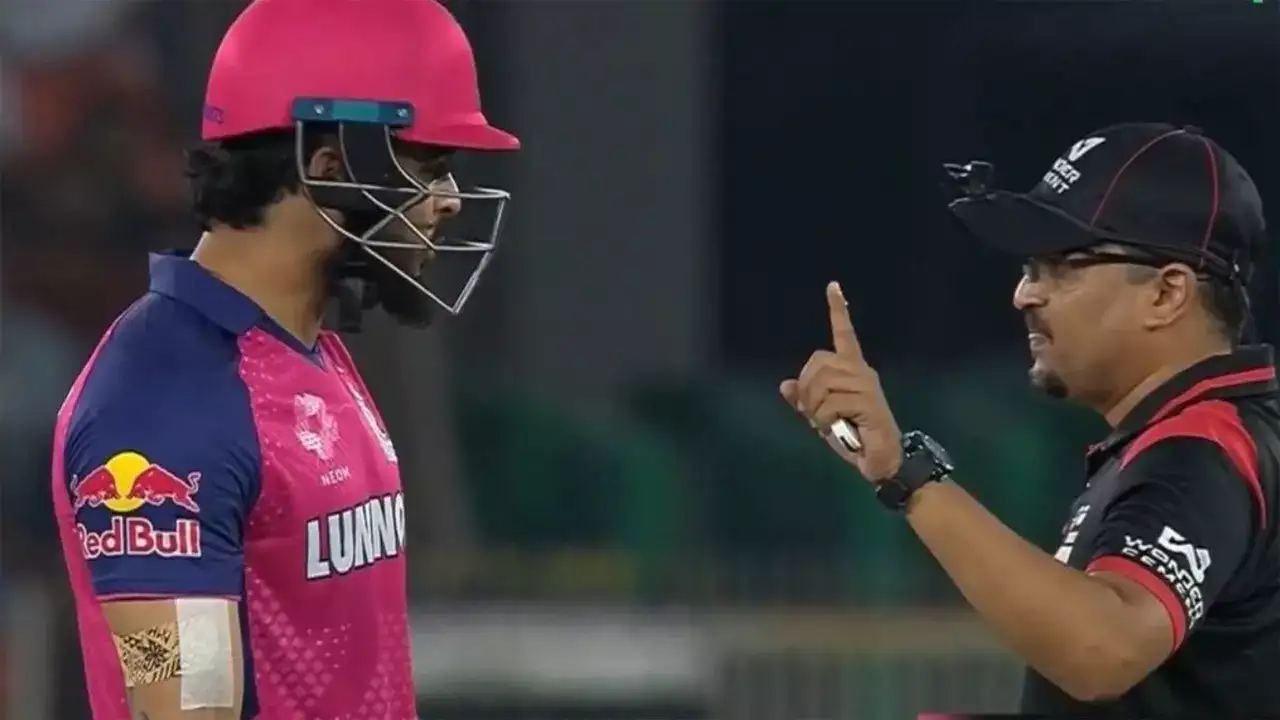
How thick is too thick? That question arose during an Indian Premier League (IPL) 2025 match when Rajasthan Royals batsman Riyan Parag's bat failed a mid-innings gauge test, triggering a visible display of frustration from the young cricketer. The incident, highlighting the BCCI's ongoing efforts to regulate bat dimensions in the age of explosive hitting, ultimately impacted Parag's performance as he managed a meager 8 runs.
The drama unfolded when the umpire, following protocol, requested to check the legality of Parag's bat. The bat is inserted into a gauge – a narrow slot with specific dimensions – to ensure it conforms to the regulations. To Parag's apparent dismay, his bat did not pass muster. Forced to switch to a different bat mid-innings, Parag's body language suggested clear displeasure with the interruption and the enforced change of equipment. He cut a frustrated figure as he trudged off the field momentarily to retrieve a compliant bat. While such checks are becoming increasingly commonplace in professional cricket, the timing and Parag's subsequent subdued innings raised questions about the psychological impact of such interventions.
The BCCI's increased scrutiny of bat sizes stems from concerns that larger bats, while not explicitly illegal within certain limits, provide an unfair advantage to batsmen, particularly in T20 cricket where maximizing power hitting is paramount. Larger bats can generate greater bat speed and a wider sweet spot, theoretically leading to longer sixes and inflated scores. This focus on bat dimensions is part of a broader effort by cricket authorities to maintain a balance between bat and ball, ensuring a fair contest and preserving the integrity of the game. The regulations aim to curb any potential for excessive advantage derived solely from equipment manipulation.
While the exact dimensions of Parag's bat and the degree to which it failed the test weren't publicly disclosed, the incident served as a stark reminder of the BCCI's commitment to enforcing these rules. Parag's subsequent innings, yielding only 8 runs, provided further fodder for discussion. Whether the enforced bat change directly impacted his performance remains a matter of speculation, but the incident undoubtedly disrupted his rhythm and concentration. It is plausible that the unexpected interruption and the need to adjust to a different bat played a role in his low score. This incident underscores the challenges players face in adapting to on-field regulations and the potential consequences, both practical and psychological, that can arise from these interventions. It also highlights the ongoing debate within cricket about the appropriate level of regulation and its impact on the game's evolving dynamics. The BCCI's proactive approach to bat size regulation reflects the organization's desire to maintain a level playing field in the increasingly competitive and high-stakes world of professional T20 cricket.
Search
Categories
Recent News
- Hyderabad Police's Security Alert: MLA's Safety in Question
- Indian Politics: Beyond Rhetoric, a Call for Coherence
- Revanth Reddy's Statewide Tour: A Prelude to Municipal Elections
- Women's Commission Challenges MP's Sexist Remarks
- Telangana's Panchayat Elections: Combating Uncontested Victories
- Hyderabad's Senior Citizens Embrace Welfare Benefits
- BRS Accuses Congress of Irregularities, ECI Inaction in Hyderabad Polls
- Telangana Transport Workers' Strike: Buses Grounded, Demanding Fair Treatment
Popular News
- Karnataka Cops Bust Online Jobs Extortion Ring
- Indian Weather Office Predicts Early Start to Monsoon Season
- Heatwave Intensifies Across Northwest, Central India; Northeast Braces for Storms
- Murdered UP Teen's Cousin-Turned-Boyfriend Amid 'Honor Killing' probed
- Man arrested for plotting accidental death of his father