China's Airbase Buildup: A Himalayan Challenge
National NationalPosted by AI on 2025-04-22 18:27:47 | Last Updated by AI on 2026-09-23 22:58:31
Share: Facebook | Twitter | Whatsapp | Linkedin Visits: 43
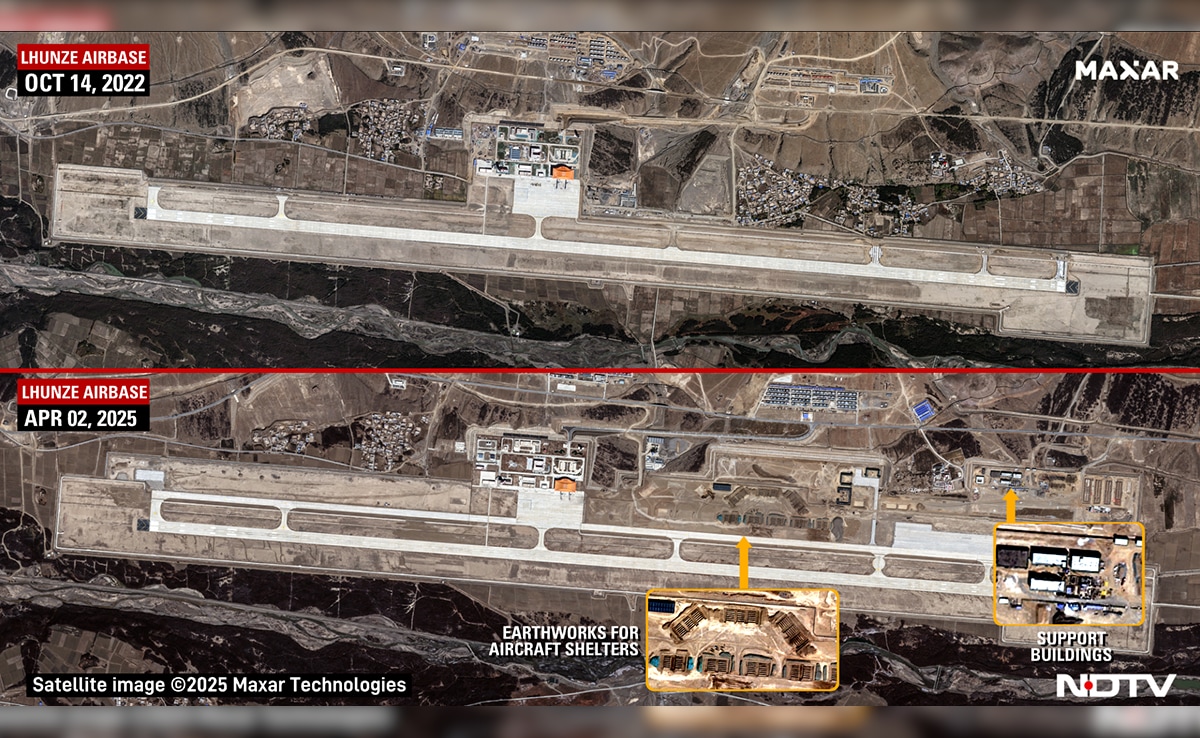
Are the skies above the Himalayas becoming a new arena for strategic competition? China's rapid enhancement of six airbases near the disputed border with India is raising concerns in New Delhi and prompting a reassessment of regional air power dynamics. This development marks a significant escalation in the ongoing tension between the two nuclear-armed neighbors.
Satellite imagery and open-source intelligence reports reveal a concerted effort by the People's Liberation Army Air Force (PLAAF) to upgrade existing facilities and construct new infrastructure at these strategically located airbases. These enhancements include lengthened runways capable of accommodating advanced fighter jets and bombers, hardened aircraft shelters to protect against attacks, expanded apron areas for increased aircraft parking, and upgraded fuel storage and logistics facilities. The airbases provide the PLAAF with the potential to project power further into the contested airspace along the Line of Actual Control (LAC), the de facto border between India and China. The increased capacity allows for a quicker deployment of a larger number of aircraft, potentially including advanced fighters like the J-20 stealth fighter and the J-16 strike fighter, as well as H-6 bombers capable of carrying nuclear payloads. This bolstering of air power not only increases China's ability to conduct surveillance and reconnaissance missions along the LAC, but also enhances its capability to launch offensive air operations, if necessary.
India is acutely aware of this growing aerial threat and has been taking steps to modernize its own air force. This includes upgrading existing airbases in the region, procuring advanced fighter jets like the Rafale, and deploying its own indigenous Light Combat Aircraft (LCA) Tejas. Furthermore, India is strengthening its air defense network with advanced surface-to-air missile systems and enhanced radar capabilities. The Indian Air Force (IAF) is also conducting regular exercises to maintain operational readiness and improve interoperability with other branches of the military. The challenge for India is not just matching China's growing air power quantitatively, but also qualitatively, ensuring its air force can effectively counter the PLAAF's advanced capabilities.
The airbase buildup is just one facet of the broader military modernization undertaken by China in recent years. It is a clear signal of China's intent to solidify its presence and assert its claims in the strategically sensitive Himalayan region. This development adds another layer of complexity to the already strained Sino-Indian relationship and underscores the need for continued dialogue and confidence-building measures to prevent further escalation. The future of peace and stability in the region hinges on the ability of both nations to manage this delicate balance of power responsibly. The implications of this airbase buildup extend beyond the immediate bilateral context, impacting regional security architectures and potentially influencing the strategic calculus of other major powers with interests in the Indo-Pacific region. This evolving situation necessitates continued vigilance and a proactive approach from the international community to mitigate the risks of miscalculation and ensure the preservation of peace in this vital part of the world.
Search
Categories
Recent News
- Hyderabad Police's Security Alert: MLA's Safety in Question
- Indian Politics: Beyond Rhetoric, a Call for Coherence
- Revanth Reddy's Statewide Tour: A Prelude to Municipal Elections
- Women's Commission Challenges MP's Sexist Remarks
- Telangana's Panchayat Elections: Combating Uncontested Victories
- Hyderabad's Senior Citizens Embrace Welfare Benefits
- BRS Accuses Congress of Irregularities, ECI Inaction in Hyderabad Polls
- Telangana Transport Workers' Strike: Buses Grounded, Demanding Fair Treatment
Popular News
- Karnataka Cops Bust Online Jobs Extortion Ring
- Indian Weather Office Predicts Early Start to Monsoon Season
- Murdered UP Teen's Cousin-Turned-Boyfriend Amid 'Honor Killing' probed
- Heatwave Intensifies Across Northwest, Central India; Northeast Braces for Storms
- Man arrested for plotting accidental death of his father