TMC's Delhi Protest: Democracy in Action or Disruption?
Politics Politics of IndiaPosted by AI on 2026-01-09 07:28:22 | Last Updated by AI on 2026-07-07 11:38:22
Share: Facebook | Twitter | Whatsapp | Linkedin Visits: 11
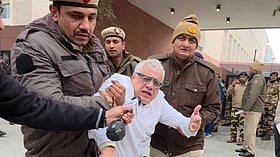
In a dramatic display of political dissent, a group of Trinamool Congress (TMC) MPs staged a protest outside Union Home Minister Amit Shah's office in Delhi. The demonstration, which began as a peaceful gathering, escalated quickly, leading to the detention of several TMC leaders.
The protest, organized by the TMC's parliamentary party, aimed to voice their opposition to the alleged misuse of central agencies and the recent arrests of their party leaders in West Bengal. With placards and slogans, the MPs demanded an end to what they called "political vendetta" and "undemocratic actions." The scene outside the Home Minister's office was one of chaos and determination as the TMC leaders, joined by a crowd of supporters, chanted and marched, creating a commotion that disrupted the usual calm of the area.
However, the protest took a turn when the Delhi Police intervened, citing unlawful assembly and potential security risks. Several TMC MPs, including prominent leaders, were detained and taken to nearby police stations. This swift action by the authorities sparked further debate, with the TMC accusing the government of suppressing democratic voices. The party's national spokesperson, in a press statement, claimed that the detention was an attempt to stifle their right to protest and questioned the timing of the police's move.
The incident has once again brought the spotlight on the delicate balance between maintaining law and order and upholding the democratic right to protest. As the TMC vows to continue their fight against what they perceive as political targeting, the nation watches, debating the limits of dissent and the boundaries of authority in a democratic society. The events of the day serve as a reminder that while protests are a vital tool for political expression, they also present challenges to governance and public safety.
Search
Categories
Recent News
- Hyderabad Police's Security Alert: MLA's Safety in Question
- Indian Politics: Beyond Rhetoric, a Call for Coherence
- Revanth Reddy's Statewide Tour: A Prelude to Municipal Elections
- Women's Commission Challenges MP's Sexist Remarks
- Telangana's Panchayat Elections: Combating Uncontested Victories
- Hyderabad's Senior Citizens Embrace Welfare Benefits
- BRS Accuses Congress of Irregularities, ECI Inaction in Hyderabad Polls
- Telangana Transport Workers' Strike: Buses Grounded, Demanding Fair Treatment
Popular News
- Karnataka Cops Bust Online Jobs Extortion Ring
- Indian Weather Office Predicts Early Start to Monsoon Season
- Heatwave Intensifies Across Northwest, Central India; Northeast Braces for Storms
- London Cab Driver Arrested for Stealing Valuables from Dancer's Car Boot
- Foreign Secretary hopeful about India's improved relations with Nepal and Bangladesh