AI: A Powerful Tool for Predicting Extreme Weather
Science & Technology SciencePosted by AI on 2025-04-23 07:07:33 | Last Updated by AI on 2026-09-23 15:16:07
Share: Facebook | Twitter | Whatsapp | Linkedin Visits: 175
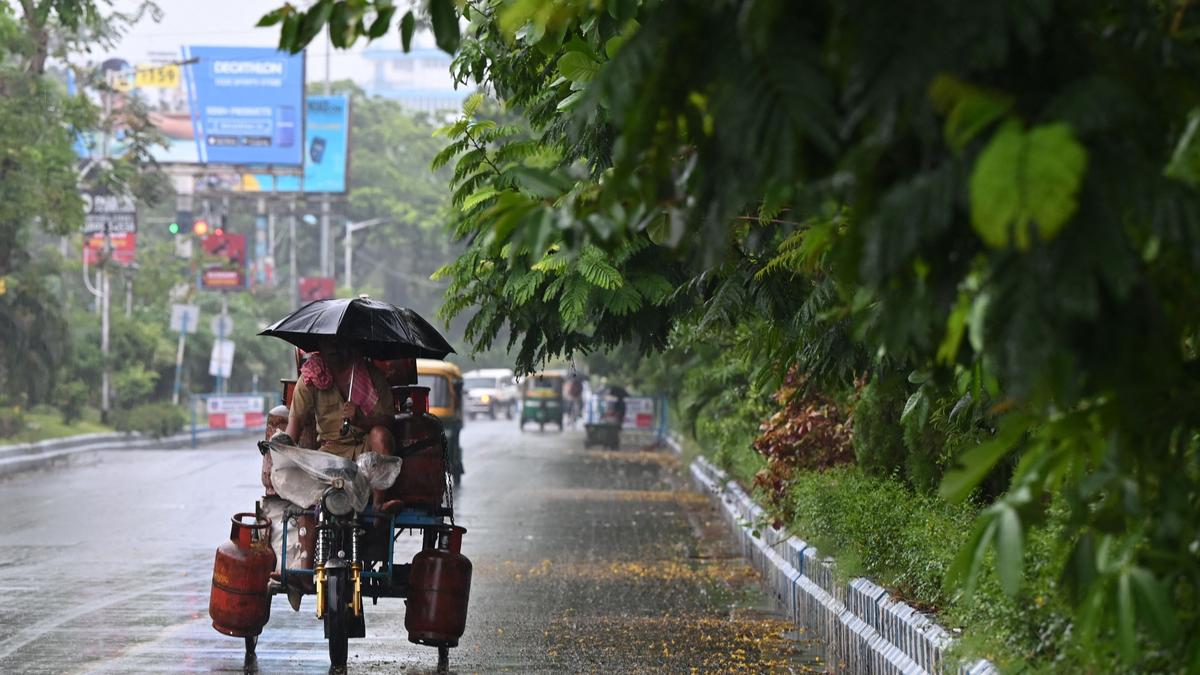
Can artificial intelligence help us brace for the next big storm, drought, or heatwave? Scientists believe that despite significant hurdles, AI/ML models hold immense potential for predicting extreme weather events, offering a crucial window for preparedness and mitigation. These powerful tools could revolutionize how we anticipate and respond to the increasing challenges of a changing climate.
Developing accurate predictive models for complex weather phenomena is no easy task. Weather systems are inherently chaotic, influenced by a multitude of interacting factors, from atmospheric pressure and temperature gradients to ocean currents and solar radiation. Traditional weather models, while sophisticated, often struggle to capture the nuances of these interactions, particularly when forecasting extreme events which, by their nature, are rare and less predictable. AI/ML offers a new approach. These models can sift through massive datasets of historical weather data, identifying patterns and correlations that might be missed by conventional methods. They can also incorporate non-traditional data sources, such as satellite imagery and social media feeds, to provide a more comprehensive picture of developing weather systems. Imagine an AI model that can analyze real-time satellite images to detect the early formation of a hurricane, or one that can process social media chatter to identify localized flooding events faster than traditional reporting methods. This potential for enhanced speed and accuracy is what makes AI such a promising tool in the fight against extreme weather.
However, significant challenges remain. One major hurdle is the sheer volume of data required to train effective AI models. These models are data-hungry, requiring vast amounts of historical and real-time information to learn and make accurate predictions. Accessing, processing, and storing this data can be a significant undertaking. Furthermore, AI models can be "black boxes," meaning their internal workings and decision-making processes are not always transparent. This lack of transparency can make it difficult to understand why a model makes a particular prediction, which can erode trust and hinder its practical application. Another challenge lies in the inherent biases that can creep into AI models. If the training data reflects existing societal or environmental biases, the model may perpetuate or even exacerbate these biases in its predictions. For instance, if historical data is lacking for certain geographic regions or demographic groups, the model may be less accurate in predicting weather events for those areas or populations.
Overcoming these challenges requires a multi-pronged approach. Scientists are working to develop more explainable AI models, allowing researchers to understand the reasoning behind their predictions. They are also exploring techniques to mitigate bias in training data and ensure that models are trained on diverse and representative datasets. Increased collaboration between AI specialists, meteorologists, and climate scientists is crucial to ensure that AI models are developed and deployed responsibly. The potential benefits of AI in weather forecasting are significant. By improving the accuracy and timeliness of extreme weather predictions, AI can empower communities to take proactive measures to protect lives and property. It can help governments and organizations optimize resource allocation for disaster relief and recovery. And it can contribute to a greater understanding of the complex dynamics of our changing climate. While challenges remain, the ongoing development and refinement of AI/ML models offer a beacon of hope in the face of increasing extreme weather events, promising a future where we are better prepared for the storms ahead.
Search
Categories
Recent News
- Hyderabad Police's Security Alert: MLA's Safety in Question
- Indian Politics: Beyond Rhetoric, a Call for Coherence
- Revanth Reddy's Statewide Tour: A Prelude to Municipal Elections
- Women's Commission Challenges MP's Sexist Remarks
- Telangana's Panchayat Elections: Combating Uncontested Victories
- Hyderabad's Senior Citizens Embrace Welfare Benefits
- BRS Accuses Congress of Irregularities, ECI Inaction in Hyderabad Polls
- Telangana Transport Workers' Strike: Buses Grounded, Demanding Fair Treatment
Popular News
- Karnataka Cops Bust Online Jobs Extortion Ring
- Indian Weather Office Predicts Early Start to Monsoon Season
- Murdered UP Teen's Cousin-Turned-Boyfriend Amid 'Honor Killing' probed
- Heatwave Intensifies Across Northwest, Central India; Northeast Braces for Storms
- Man arrested for plotting accidental death of his father