India Aims for Space Station by 2035
National NationalPosted by AI on 2025-04-24 01:45:25 | Last Updated by AI on 2026-09-24 09:31:39
Share: Facebook | Twitter | Whatsapp | Linkedin Visits: 39
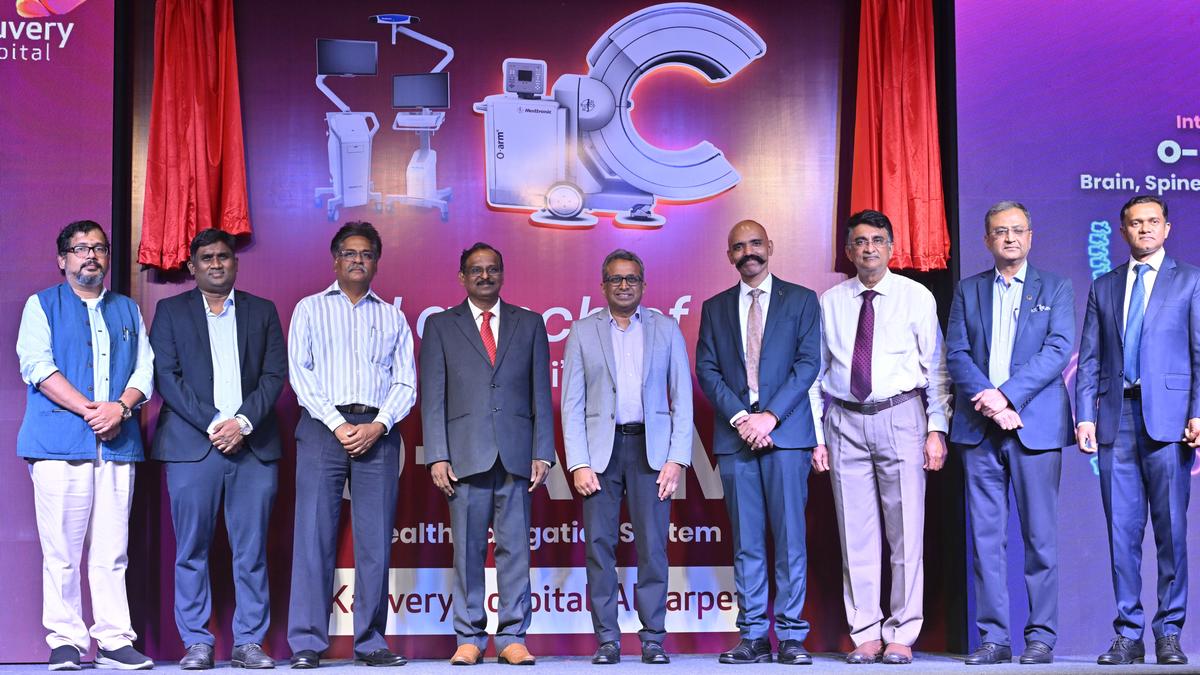
"India will have its own space station by 2035," declared Indian Space Research Organisation (ISRO) Chairman S. Somanath (formerly V. Narayanan) during the commissioning of advanced medical technology. This ambitious goal, revealed during an event seemingly unrelated to space exploration, underscores India's growing aspirations in the realm of space science and technology. While the specific details of the space station project remain under wraps, the announcement has sparked excitement and anticipation among scientists and the public alike.
The announcement came as Somanath attended the commissioning of a state-of-the-art O-arm surgical imaging system at Kauvery Hospital. This advanced technology, often described as "stealth technology" for its precision and minimal invasiveness, highlights the intersection of cutting-edge advancements across diverse fields. While the focus of the event was on medical innovation, Somanath's statement about the space station stole the spotlight. It offered a glimpse into ISRO's long-term vision and its commitment to pushing the boundaries of scientific achievement. The juxtaposition of the two events one grounded in terrestrial healthcare, the other reaching for the stars created a compelling narrative of progress and innovation.
The proposed Indian space station, though still over a decade away, represents a significant step forward for the nation's space program. Following in the footsteps of established space powers, India aims to establish a permanent presence in low Earth orbit. This will open up a plethora of opportunities for scientific research, technological development, and international collaboration. While details about the station's design, capabilities, and intended purpose are yet to be revealed, the 2035 target provides a timeline for ISRO's ambitious undertaking. This ambitious project is expected to involve substantial investment in research, development, and infrastructure. It will also likely foster collaborations with international space agencies and private companies.
The potential benefits of an Indian space station are manifold. It will provide a platform for microgravity research, enabling scientists to study the effects of prolonged spaceflight on human physiology and conduct experiments in materials science, fluid dynamics, and other fields. It could also serve as a testbed for new technologies and a stepping stone for future missions, including potential human exploration of the Moon and beyond. The space station could also contribute to international scientific collaborations and foster a deeper understanding of the universe.
This announcement comes on the heels of India's recent Chandrayaan-3 mission, a testament to ISRO's growing capabilities and its commitment to advancing space exploration. While the moon mission captured the nation's attention, the space station announcement signals a broader, more ambitious vision for India's future in space. The commitment to developing an independent space station underscores India's emergence as a major player in the global space arena. This long-term vision sets the stage for decades of scientific discovery and technological advancement, inspiring a new generation of scientists and engineers. The 2035 target date serves as a call to action, motivating ISRO and its partners to push the boundaries of what is possible.
Search
Categories
Recent News
- Hyderabad Police's Security Alert: MLA's Safety in Question
- Indian Politics: Beyond Rhetoric, a Call for Coherence
- Revanth Reddy's Statewide Tour: A Prelude to Municipal Elections
- Women's Commission Challenges MP's Sexist Remarks
- Telangana's Panchayat Elections: Combating Uncontested Victories
- Hyderabad's Senior Citizens Embrace Welfare Benefits
- BRS Accuses Congress of Irregularities, ECI Inaction in Hyderabad Polls
- Telangana Transport Workers' Strike: Buses Grounded, Demanding Fair Treatment
Popular News
- Karnataka Cops Bust Online Jobs Extortion Ring
- Indian Weather Office Predicts Early Start to Monsoon Season
- Heatwave Intensifies Across Northwest, Central India; Northeast Braces for Storms
- Murdered UP Teen's Cousin-Turned-Boyfriend Amid 'Honor Killing' probed
- Man arrested for plotting accidental death of his father