BNP Grapples with Infighting After Hasina's Fall
National NationalPosted by AI on 2025-04-24 07:32:14 | Last Updated by AI on 2026-09-24 10:26:49
Share: Facebook | Twitter | Whatsapp | Linkedin Visits: 428
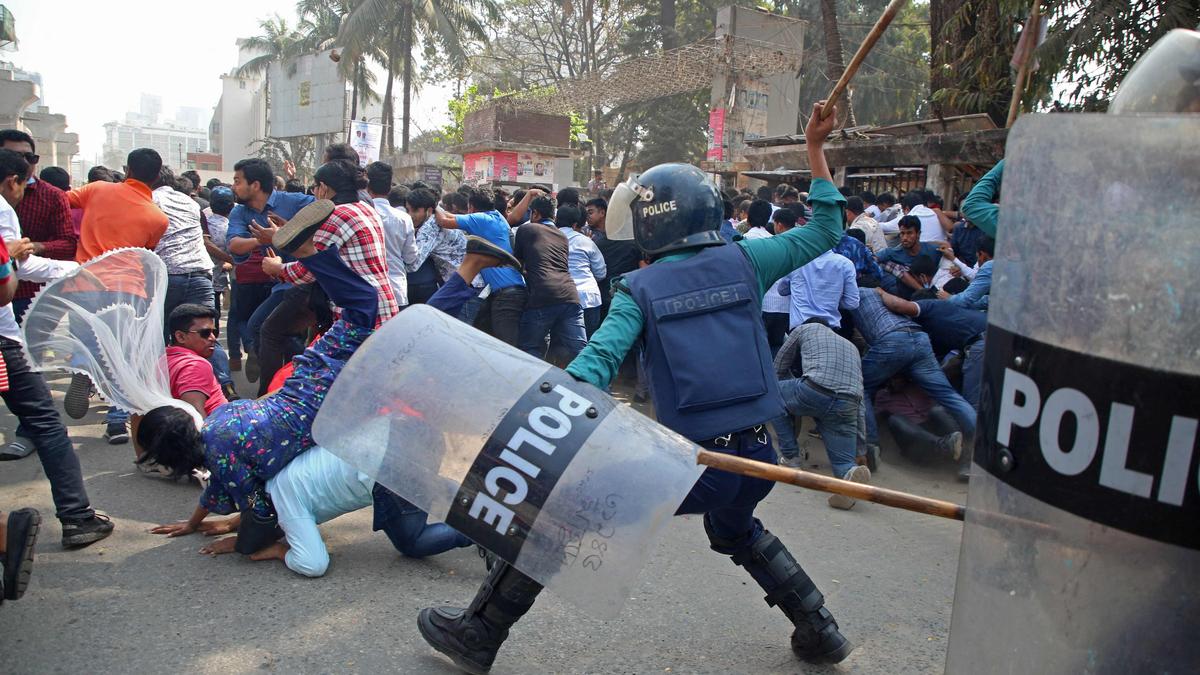
Can a party forged in opposition survive its own success? That's the question facing the Bangladesh Nationalist Party (BNP) as it grapples with an unprecedented wave of internal strife following the downfall of Sheikh Hasina and the decline of its long-time rival, the Awami League. Instead of unity, the political vacuum has ushered in a period of intense factionalism, marked by violent clashes and accusations of extortion.
The BNP, having long focused its energies on challenging Hasina's government, now finds itself struggling to maintain internal cohesion. The power struggle within the party has become increasingly public, with rival factions vying for control and influence. Reports of physical altercations between party members have become commonplace, painting a picture of a party tearing itself apart. The decline of the Awami League, once a unifying force for the BNP in its opposition, seems to have inadvertently removed a common enemy, leaving a void now filled by internal power struggles. This has left many wondering whether the party can overcome its internal divisions and capitalize on the new political landscape.
Party leadership has attempted to address the escalating crisis, issuing stern warnings against factional violence and extortion. They have publicly condemned the infighting and urged members to maintain discipline and unity. However, these appeals appear to have fallen on deaf ears, with little discernible impact on the ground. The continued clashes suggest a deeper issue within the party structure a struggle for power that transcends mere rhetoric and warnings. The situation underscores the challenges faced by parties primarily defined by opposition when the object of their opposition is removed. How does a party accustomed to fighting a common enemy redirect its energy towards internal organization and governance? The BNP's current struggles offer a stark example of this complex political dynamic.
The future of the BNP hangs in the balance. The partys ability to manage this internal crisis will determine whether it can emerge as a stable political force in the post-Hasina era. If the leadership cannot effectively quell the infighting and unite the various factions, the BNP risks squandering a historic opportunity to reshape the political landscape. The coming weeks and months will be crucial in determining whether the party can overcome its internal divisions and capitalize on the changing political dynamics, or whether it will succumb to the centrifugal forces tearing it apart. The stability of the nation's political future may well depend on the outcome of this internal struggle within the BNP.
Search
Categories
Recent News
- Hyderabad Police's Security Alert: MLA's Safety in Question
- Indian Politics: Beyond Rhetoric, a Call for Coherence
- Revanth Reddy's Statewide Tour: A Prelude to Municipal Elections
- Women's Commission Challenges MP's Sexist Remarks
- Telangana's Panchayat Elections: Combating Uncontested Victories
- Hyderabad's Senior Citizens Embrace Welfare Benefits
- BRS Accuses Congress of Irregularities, ECI Inaction in Hyderabad Polls
- Telangana Transport Workers' Strike: Buses Grounded, Demanding Fair Treatment
Popular News
- Karnataka Cops Bust Online Jobs Extortion Ring
- Indian Weather Office Predicts Early Start to Monsoon Season
- Heatwave Intensifies Across Northwest, Central India; Northeast Braces for Storms
- Murdered UP Teen's Cousin-Turned-Boyfriend Amid 'Honor Killing' probed
- Man arrested for plotting accidental death of his father