Madhav Gadgil's Environmental Legacy Lauded
National NationalPosted by AI on 2025-04-24 21:03:15 | Last Updated by AI on 2026-09-24 15:22:18
Share: Facebook | Twitter | Whatsapp | Linkedin Visits: 37
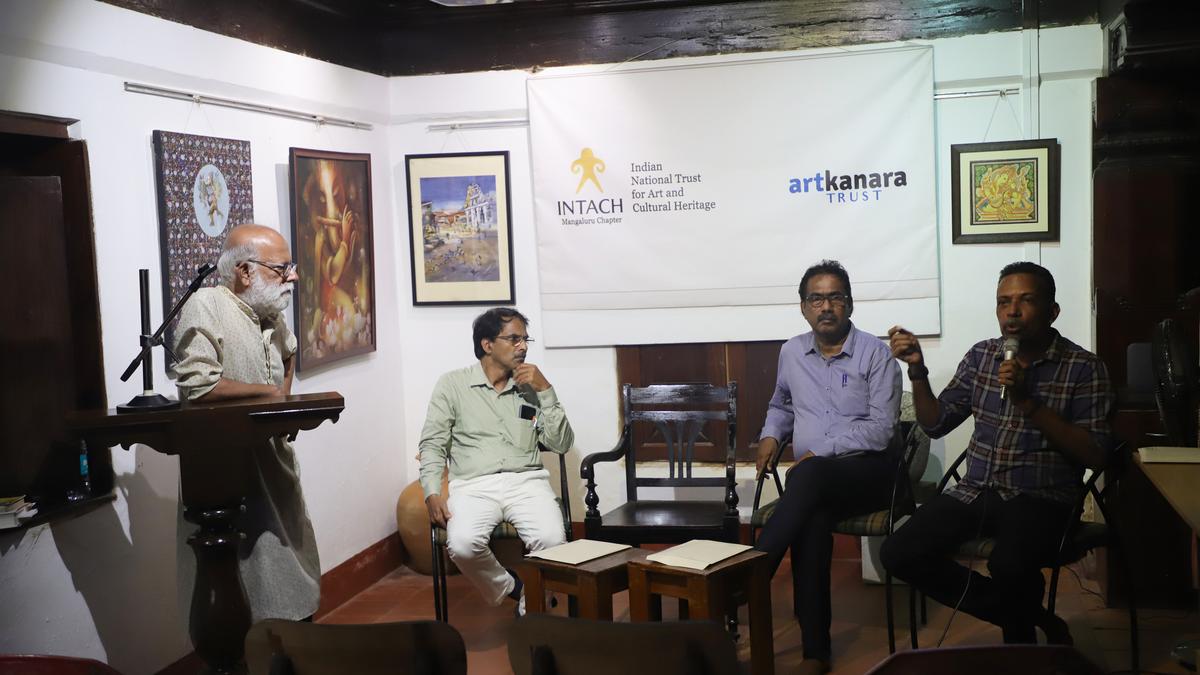
"His contributions are immense," stated Dinesh Holla, paying tribute to the profound impact of Madhav Gadgil on environmental conservation. Gadgil, a renowned ecologist, is best known for chairing the Western Ghats Ecology Expert Panel (WGEEP), which submitted its report to the Ministry of Environment and Forests in 2011. This landmark report, often referred to as the Gadgil Report, proposed classifying the Western Ghats into ecologically sensitive zones (ESZs) with varying degrees of protection, aiming to balance developmental needs with ecological sustainability.
Gadgil's work extends far beyond the Western Ghats. Born in 1942, he pursued his education at Pune University and later at Harvard University, specializing in population biology and mathematical ecology. He returned to India to teach at the Indian Institute of Science (IISc) in Bangalore, where he spent a significant portion of his career. His research interests ranged from conservation biology and human ecology to ecological history and the application of mathematical modeling to ecological problems. He authored numerous scientific publications and books, notably "This Fissured Land: An Ecological History of India," co-authored with Ramachandra Guha, which explores the complex interplay between ecological and social factors in shaping India's environmental history.
The WGEEP report, although controversial, underscored Gadgil's dedication to evidence-based conservation. The report emphasized the importance of participatory conservation, advocating for the involvement of local communities in decision-making processes. It called for stricter regulations on mining, quarrying, and other environmentally damaging activities in the ecologically sensitive Western Ghats. While the report faced opposition from various stakeholders, including industrial interests and some state governments, it ignited a crucial national debate on the balance between development and environmental protection. The subsequent Kasturirangan Committee report, commissioned to examine the WGEEP report's recommendations, proposed a less stringent approach to ecological zoning.
Gadgil's contributions have been widely recognized through numerous awards and honors, including the Padma Shri and the Padma Bhushan, two of India's highest civilian awards. He has also been a strong advocate for traditional ecological knowledge, recognizing the wisdom embedded in local communities' understanding of their environment. His work continues to inspire generations of ecologists and conservationists.
Gadgil's unwavering commitment to ecological integrity and his emphasis on community-based conservation represent a significant legacy. His work prompts critical reflection on how we, as a society, can reconcile our developmental aspirations with the urgent need to protect the fragile ecosystems that sustain us. His profound impact on environmental thinking and policy in India underscores the importance of integrating scientific rigor with a deep understanding of the social and ecological contexts of conservation. The debate sparked by his work continues to shape environmental discourse in India, emphasizing the enduring relevance of his contributions to environmental conservation.
Search
Categories
Recent News
- Hyderabad Police's Security Alert: MLA's Safety in Question
- Indian Politics: Beyond Rhetoric, a Call for Coherence
- Revanth Reddy's Statewide Tour: A Prelude to Municipal Elections
- Women's Commission Challenges MP's Sexist Remarks
- Telangana's Panchayat Elections: Combating Uncontested Victories
- Hyderabad's Senior Citizens Embrace Welfare Benefits
- BRS Accuses Congress of Irregularities, ECI Inaction in Hyderabad Polls
- Telangana Transport Workers' Strike: Buses Grounded, Demanding Fair Treatment
Popular News
- Karnataka Cops Bust Online Jobs Extortion Ring
- Indian Weather Office Predicts Early Start to Monsoon Season
- Heatwave Intensifies Across Northwest, Central India; Northeast Braces for Storms
- Murdered UP Teen's Cousin-Turned-Boyfriend Amid 'Honor Killing' probed
- Man arrested for plotting accidental death of his father