Mary Clubwala Jadhav: Pioneer of Professional Social Work in Madras
National NationalPosted by AI on 2025-04-25 00:32:18 | Last Updated by AI on 2026-09-24 16:52:43
Share: Facebook | Twitter | Whatsapp | Linkedin Visits: 47
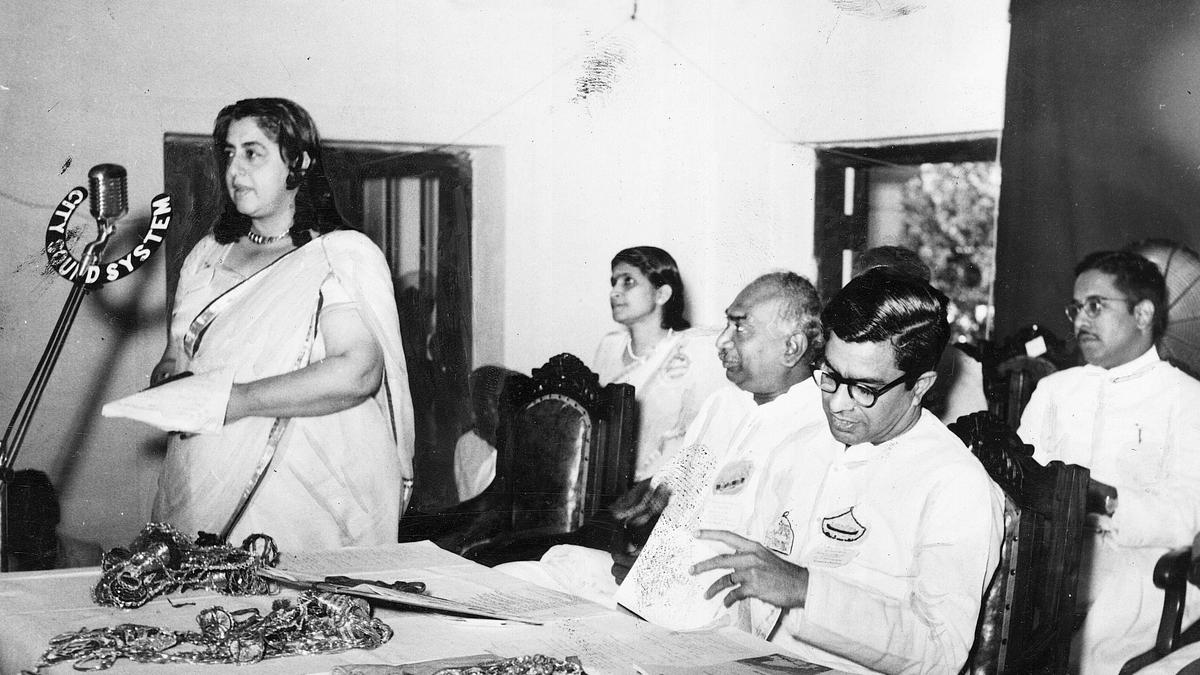
How does one transform personal tragedy into a force for societal good? Mary Clubwala Jadhav, born in Udhagamandalam in 1908, exemplifies this. At the young age of 27, widowed and facing an uncertain future, she chose a path of service, joining the Guild of Service in Madras. This decision marked not only a turning point in her life but also a significant shift in the landscape of social work in India. Jadhav recognized a critical gap in the existing system: the lack of trained professionals to address the complex and evolving needs of society. Driven by this realization, she embarked on a mission to revolutionize social work.
Jadhav's commitment extended beyond simply identifying the problem. She understood that to build a sustainable and impactful model for social work, she needed to learn from the best. This led her on a series of fact-finding missions to several countries, studying established social work programs and institutions. She immersed herself in understanding different approaches, methodologies, and best practices, seeking inspiration and knowledge to create a similar framework in India. Inspired by the Tata Institute of Social Sciences, a pioneering institution in the field, Jadhav returned to Madras with a clear vision. In a time when funding for social initiatives was scarce, she managed to secure the necessary resources and support to establish the Madras School of Social Work. This institution, founded on the principles of professionalism and rigorous training, aimed to equip future social workers with the skills and knowledge necessary to effectively address societal challenges.
The founding of the Madras School of Social Work was a watershed moment. It marked a departure from the traditional, often ad-hoc approach to social work, ushering in an era of professionalized service. Jadhav understood that social work, far from being simply charitable activity, required specialized knowledge, skills, and a deep understanding of social dynamics. Her vision was to create a cadre of trained professionals who could approach social issues with a scientific and systematic methodology, moving beyond mere altruism to create lasting change. The school quickly became a hub for aspiring social workers, offering a structured curriculum and practical training opportunities. It played a pivotal role in shaping the future of social work in the region and beyond, producing graduates who went on to make significant contributions in various fields, from community development to healthcare and education.
The legacy of Mary Clubwala Jadhav extends far beyond the bricks and mortar of the Madras School of Social Work. She not only established an institution but also instilled a new ethos in the field of social work in India. Her pioneering work laid the foundation for a more professional and impactful approach to addressing social issues, ensuring that even with limited resources, dedicated individuals could make a profound difference. Jadhavs transformative journey serves as a powerful reminder of the potential for individual initiative to create lasting societal change, even in the face of adversity. Her unwavering commitment to professionalizing social work continues to inspire generations of social workers to tackle the complex challenges of our time with skill, compassion, and unwavering dedication.
Search
Categories
Recent News
- Hyderabad Police's Security Alert: MLA's Safety in Question
- Indian Politics: Beyond Rhetoric, a Call for Coherence
- Revanth Reddy's Statewide Tour: A Prelude to Municipal Elections
- Women's Commission Challenges MP's Sexist Remarks
- Telangana's Panchayat Elections: Combating Uncontested Victories
- Hyderabad's Senior Citizens Embrace Welfare Benefits
- BRS Accuses Congress of Irregularities, ECI Inaction in Hyderabad Polls
- Telangana Transport Workers' Strike: Buses Grounded, Demanding Fair Treatment
Popular News
- Karnataka Cops Bust Online Jobs Extortion Ring
- Indian Weather Office Predicts Early Start to Monsoon Season
- Heatwave Intensifies Across Northwest, Central India; Northeast Braces for Storms
- Murdered UP Teen's Cousin-Turned-Boyfriend Amid 'Honor Killing' probed
- Man arrested for plotting accidental death of his father