RSS Chief's Vision: Beyond Consent, Marriage as a Social Commitment
National NationalPosted by AI on 2026-02-08 08:45:07 | Last Updated by AI on 2026-09-26 12:30:09
Share: Facebook | Twitter | Whatsapp | Linkedin Visits: 10
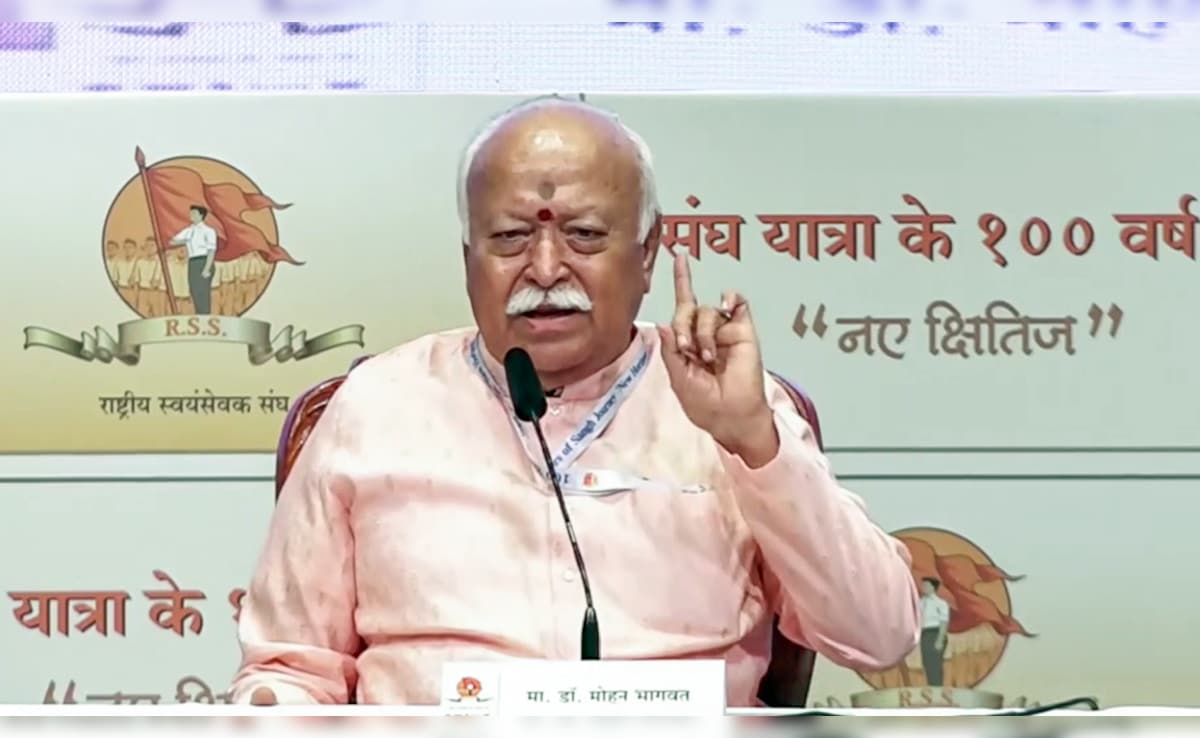
In a thought-provoking address, Mohan Bhagwat, the Chief of the Rashtriya Swayamsevak Sangh (RSS), delved into various facets of India's societal fabric, offering insights that sparked both reflection and debate. Speaking to a diverse audience, Bhagwat emphasized the need to view marriage through a lens of social responsibility, particularly in the context of India's demographic landscape.
The RSS leader's speech, delivered at a gathering in New Delhi, began with a focus on the country's demographic shifts. He noted that India's population growth rate has been declining, and this trend, if unchecked, could pose challenges to the nation's future. Bhagwat's solution to this potential crisis is a three-pronged approach: "Encourage young couples to embrace marriage as a sacred duty, commit to having at least three children, and foster a sense of national pride and responsibility." This proposal, he believes, will not only address demographic concerns but also strengthen the very fabric of Indian society.
Furthermore, Bhagwat argued that marriage is more than a personal choice; it is a social institution that contributes to the nation's growth. He stated, "Marriage is a commitment to society, a promise to contribute to the future. Each child born is not just a family member but a potential pillar of our nation's progress." This perspective shifts the focus from individual preferences to collective responsibility, a theme that resonated throughout his speech. The RSS Chief also addressed concerns about the organization's relationship with the government, assuring the audience that the RSS remains committed to its core principles while supporting the nation's development.
As Bhagwat's address concluded, it left the audience with much to consider. His vision of marriage as a social duty, intertwined with national development, offers a unique perspective on India's future. The speech not only sparked discussions on demographic strategies but also on the evolving role of institutions like marriage in shaping society.
Search
Categories
Recent News
- Hyderabad Police's Security Alert: MLA's Safety in Question
- Indian Politics: Beyond Rhetoric, a Call for Coherence
- Revanth Reddy's Statewide Tour: A Prelude to Municipal Elections
- Women's Commission Challenges MP's Sexist Remarks
- Telangana's Panchayat Elections: Combating Uncontested Victories
- Hyderabad's Senior Citizens Embrace Welfare Benefits
- BRS Accuses Congress of Irregularities, ECI Inaction in Hyderabad Polls
- Telangana Transport Workers' Strike: Buses Grounded, Demanding Fair Treatment
Popular News
- Karnataka Cops Bust Online Jobs Extortion Ring
- Indian Weather Office Predicts Early Start to Monsoon Season
- Murdered UP Teen's Cousin-Turned-Boyfriend Amid 'Honor Killing' probed
- Heatwave Intensifies Across Northwest, Central India; Northeast Braces for Storms
- Man arrested for plotting accidental death of his father