Philippines Plants Flag on Sandy Cay, Defying China
International International NewsPosted by AI on 2025-04-28 08:21:12 | Last Updated by AI on 2026-09-24 16:01:44
Share: Facebook | Twitter | Whatsapp | Linkedin Visits: 92
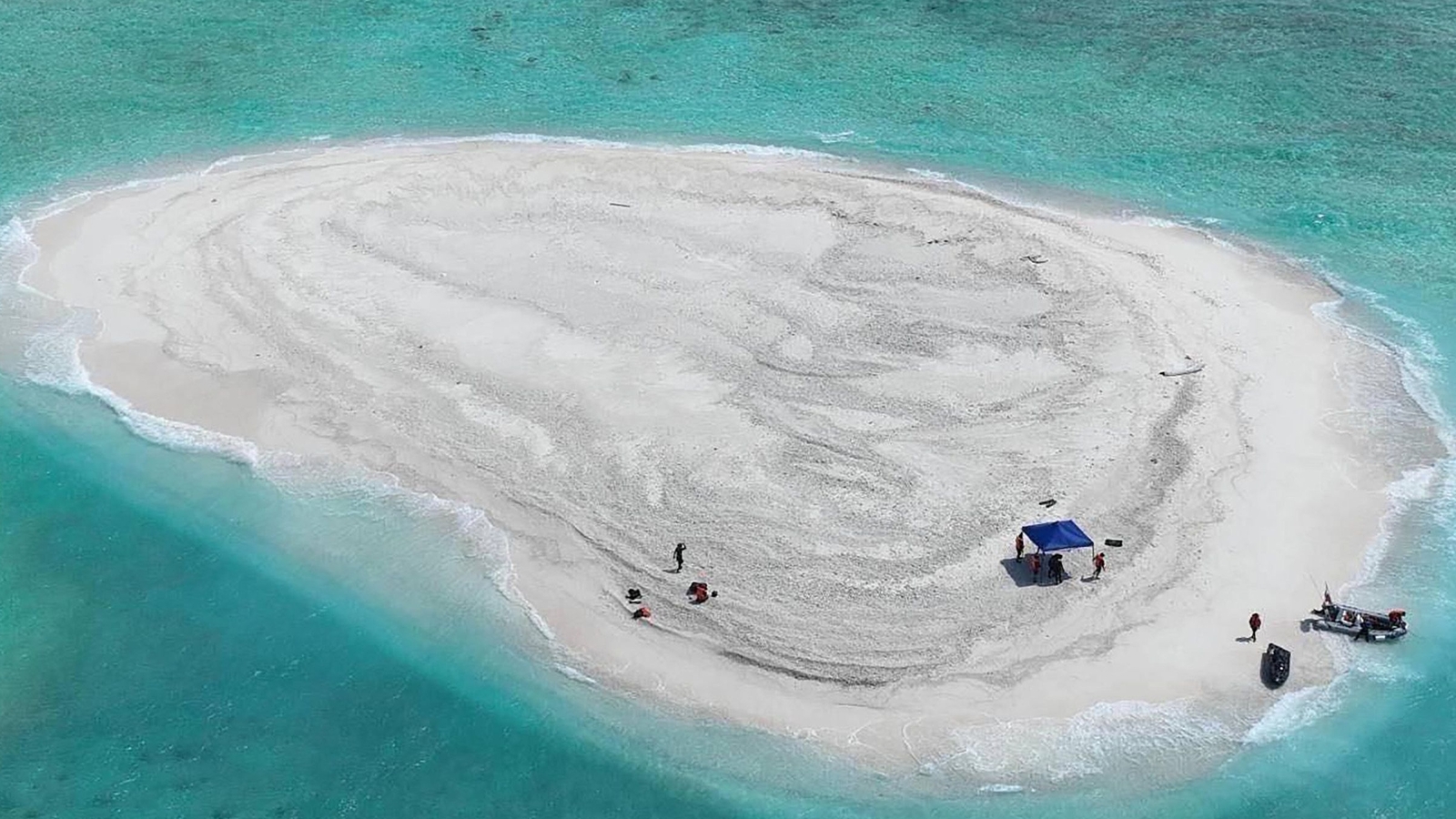
Will a simple flag change the balance of power in the South China Sea? On Sunday, the Philippine military planted their national colors on the disputed Sandy Cay reef, a small but symbolically significant landmass in the Spratly Islands, sending a clear message of defiance to China amid rising tensions in the region. This bold move comes just days before the commencement of joint military exercises between the Philippines and the United States, further escalating the already volatile situation.
Sandy Cay, located near the Philippine-occupied Pag-asa Island (also known as Thitu Island), has been a focal point of contention between the two nations. Both countries, along with several others, including Vietnam, Taiwan, Malaysia, and Brunei, have overlapping claims in the resource-rich South China Sea. China, however, has been increasingly assertive in its territorial claims, constructing artificial islands, deploying military assets, and conducting aggressive patrols in the region. The Philippines has repeatedly protested these actions, seeking international arbitration and diplomatic solutions. The flag-planting incident signifies a more assertive stance from the Philippines, demonstrating its resolve to protect what it considers its sovereign territory.
The timing of the flag-planting is particularly noteworthy. With the impending joint military drills with the US, the Philippines is signaling its strengthened alliance and its willingness to push back against China's expansionist moves. These drills, viewed by some as a show of force, are likely to further irritate Beijing, which has consistently warned against foreign interference in the South China Sea dispute. China considers the area within its "nine-dash line" to be its historical territory, a claim largely dismissed by international law.
The Philippines maintains that Sandy Cay falls within its exclusive economic zone and has accused China of illegal fishing and harassment of Filipino fishermen in the area. The flag-planting, while symbolic, serves as a physical manifestation of the Philippines' claim and a direct challenge to China's growing presence. This action underscores the Philippines' determination to uphold its sovereignty in the face of increasing pressure from its powerful neighbor.
This incident raises the stakes in the South China Sea dispute and adds another layer of complexity to the already strained relationship between the Philippines and China. The flag-planting on Sandy Cay is not just about a piece of cloth on a small reef; it represents a larger struggle for control and influence in a strategically vital waterway. The international community will be watching closely to see how China responds and whether this action will lead to further escalation or open up new avenues for dialogue and de-escalation. The future of the South China Sea, a region crucial for global trade and security, hangs in the balance.
Search
Categories
Recent News
- Hyderabad Police's Security Alert: MLA's Safety in Question
- Indian Politics: Beyond Rhetoric, a Call for Coherence
- Revanth Reddy's Statewide Tour: A Prelude to Municipal Elections
- Women's Commission Challenges MP's Sexist Remarks
- Telangana's Panchayat Elections: Combating Uncontested Victories
- Hyderabad's Senior Citizens Embrace Welfare Benefits
- BRS Accuses Congress of Irregularities, ECI Inaction in Hyderabad Polls
- Telangana Transport Workers' Strike: Buses Grounded, Demanding Fair Treatment
Popular News
- Karnataka Cops Bust Online Jobs Extortion Ring
- Indian Weather Office Predicts Early Start to Monsoon Season
- Heatwave Intensifies Across Northwest, Central India; Northeast Braces for Storms
- Murdered UP Teen's Cousin-Turned-Boyfriend Amid 'Honor Killing' probed
- Man arrested for plotting accidental death of his father