Advancing Neuromorphic Computing for Greater Efficiency and Enhanced AI
Innovations and Initiatives Innovations and InitiativesPosted by NewAdmin on 2025-01-24 12:18:33 |
Share: Facebook | Twitter | Whatsapp | Linkedin Visits: 35
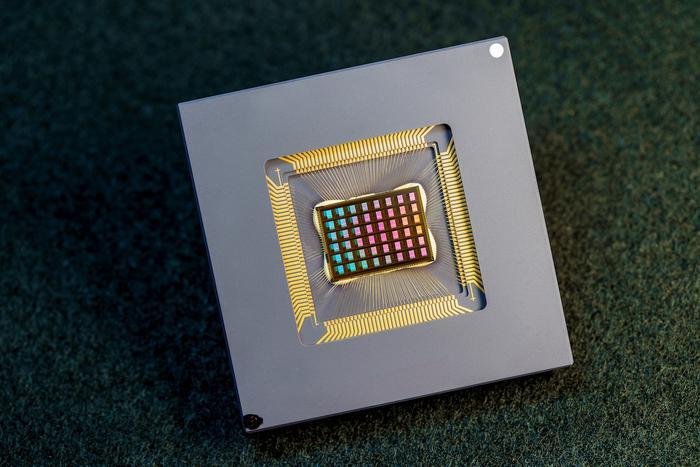
Neuromorphic computing, a field inspired by neuroscience, seeks to create computing systems that mimic the brain’s structure and function. To become competitive with current computing methods, it must scale significantly. Researchers have now outlined a comprehensive roadmap to achieve this scalability.
This research provides a practical framework for advancing neuromorphic computing toward the cognitive capabilities of the human brain, with comparable size and energy consumption.
The authors emphasize that no single solution will suit all needs for large-scale neuromorphic systems. Instead, they anticipate a variety of neuromorphic hardware tailored to specific applications.
Wide-ranging applications of neuromorphic computing:
Neuromorphic computing has diverse applications, including artificial intelligence, scientific computing, augmented and virtual reality, wearables, smart farming, and smart cities. Neuromorphic chips promise significant advantages in energy efficiency, space utilization, and performance over traditional computing systems. These benefits could transform fields such as AI, robotics, and healthcare.
With AI’s electricity consumption expected to double by 2026, neuromorphic computing offers a sustainable alternative. “The rapid scaling of power- and resource-hungry AI systems makes neuromorphic computing particularly relevant,” said Gert Cauwenberghs, Distinguished Professor at UC San Diego and co-author of the study.
According to Dhireesha Kudithipudi, Robert F. McDermott Endowed Chair at the University of Texas San Antonio, neuromorphic computing is at a pivotal juncture. “There’s tremendous opportunity now to develop new architectures and open frameworks for commercial applications,” she stated, emphasizing the need for collaboration between industry and academia.
Advancing neuromorphic systems:
Cauwenberghs and Kudithipudi previously secured a $4 million National Science Foundation grant to establish THOR: The Neuromorphic Commons. This initiative aims to provide open access to neuromorphic hardware and tools to support interdisciplinary research.
In 2022, Cauwenberghs’s team developed the NeuRRAM chip, which performs computations directly in memory. This chip supports various AI applications with significantly lower energy consumption than traditional platforms.
Cauwenberghs noted, “Our research explores expanding neuromorphic AI systems in silicon and emerging chip technologies to match the scale and efficiency of the mammalian brain’s self-learning capacity.”
Mimicking the human brain’s activity
To scale neuromorphic computing, the researchers propose optimizing features like sparsity—a hallmark of the human brain. The brain initially forms dense neural connections, then prunes excess connections to enhance spatial efficiency while preserving high-fidelity information. This approach could make neuromorphic systems more energy-efficient and compact.
Cauwenberghs highlighted that the brain’s massive parallelism and hierarchical structure contribute to its scalability and efficiency.
The authors also stress the importance of fostering collaboration across academia and industry and developing accessible programming languages. Such efforts could encourage interdisciplinary participation and accelerate progress in neuromorphic computing.
Search
Categories
Recent News
- Hyderabad's Drug Bust: Uncovering a Sophisticated Network
- Hyderabad Rings in the New Year with Strict Rules
- Messi's India Tour: Hyderabad Gears Up After Kolkata Chaos
- Hyderabad Cracks Down on Drunk Driving: 407 Arrested in Weekend Blitz
- Hyderabad's Cyber Cops Foil Fraudsters: Quick Action Recovers Over Rs. 6 Lakh
- Hyderabad's Winter Fog: A Dangerous Drive
- Hyderabad's Drug Bust: Uncovering a Sophisticated Interstate Network
- Hyderabad Police Chief Warns Trans Community: No Forced Collections
Popular News
- Navigating IPO Market Dynamics Amid Volatility and Regulatory Changes
- Innovative Green Practices and Environmental Initiative
- Massive Worldwide Microsoft Outage Disrupts Multiple Sectors
- తెలుగుదేశం పార్టీ - పేదరికాన్ని నిర్మూలించడంలో వాగ్దానం
- Universities Embrace Remote Learning Technologies Amidst Ongoing Pandemic